By Scott Bailey (c) 2022
Ever fallen in love
With the prospect of peace
Hey
It can’t be that far fetched
19-2000
Let’s not repeat
Elephant
Sitting smugly in the room
Sit down
This may take some time
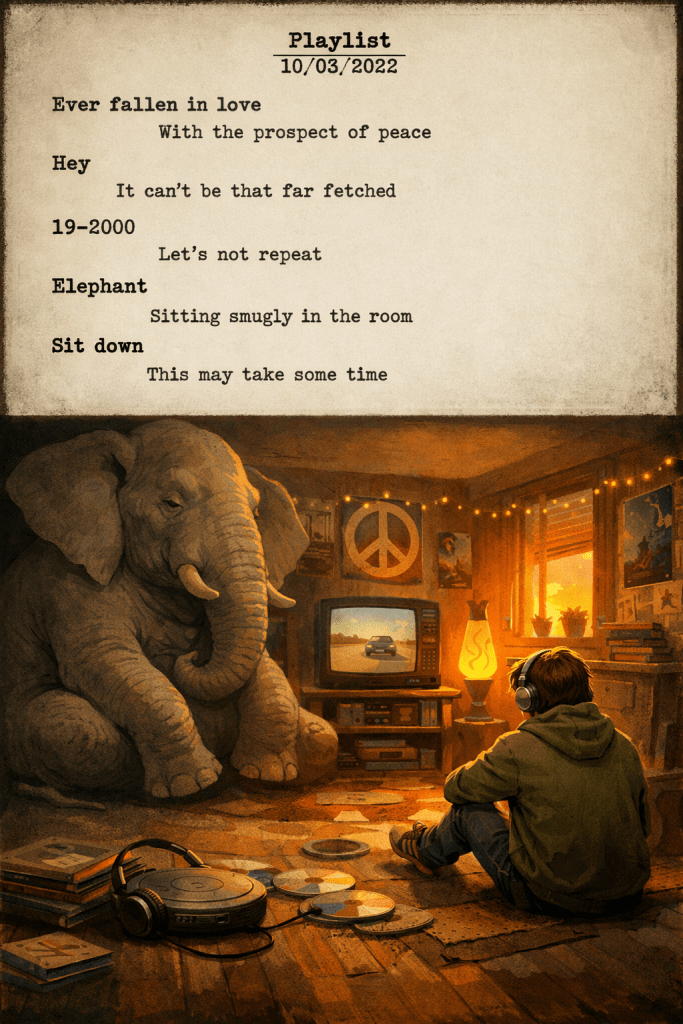
By Scott Bailey (c) 2022
Ever fallen in love
With the prospect of peace
Hey
It can’t be that far fetched
19-2000
Let’s not repeat
Elephant
Sitting smugly in the room
Sit down
This may take some time
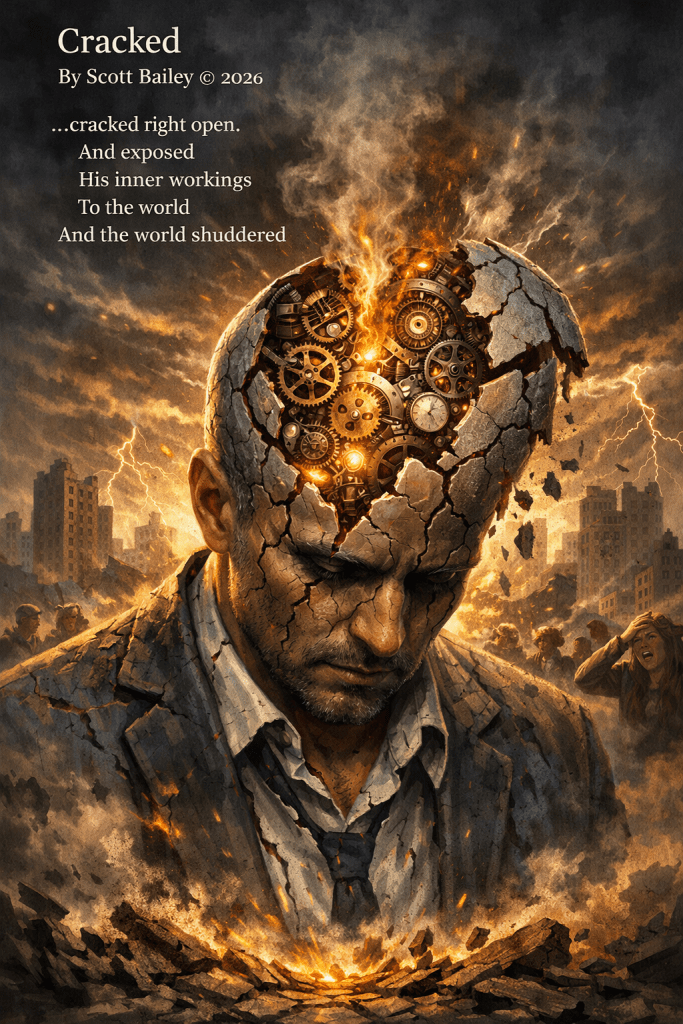
By Scott Bailey © 2026
…cracked right open.
And exposed
His inner workings
To the world
And the world shuddered
In response to malformed_poetry’s prompt
https://www.threads.com/@malformed_poetry/post/DV_RXrFkoVC?xmt=AQF0KqJMd3Wfun77x-yzGgCSOPh0x0mLfvQXoxmdqH2SXUmV8idqVp8-7ru0mPdb1wiHjL0o&slof=1
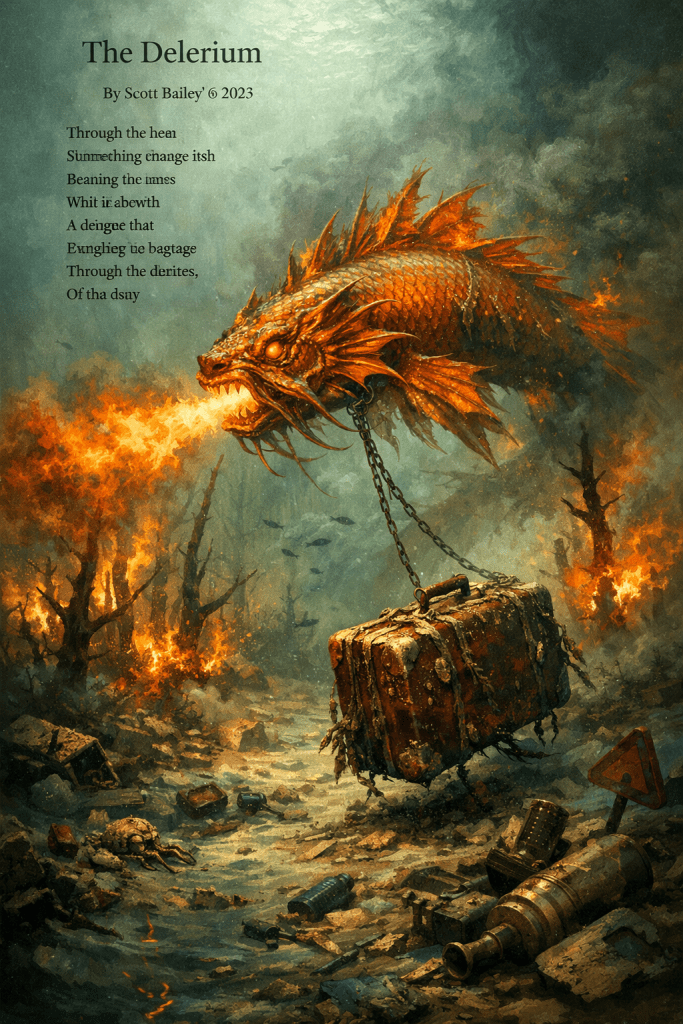
By Scott Bailey © 2026
Through the haze
Shimmering orange fish
Burning the trees
With its breath
A dragon fish
Dragging its luggage
Through the detritus
Of the deep
Tides shift
In response to malformed_poetry’s prompt
https://www.threads.com/@malformed_poetry/post/DV8tDLYE5mX?xmt=AQF0OAaieRIftsKq76efIRpqCygeHZigfmF4_lyAKyTpuKTmu6bKdyC2hL0vARk13Kor4xbE&slof=1
By Scott Bailey © 2026
From dark to light
From warm to cold
From dry to wet
From inside to out
The transition is the bump
The shock that wakes
The spark of life
So move back and forth
Never still
And live

In response to malformed_poetry’s prompt
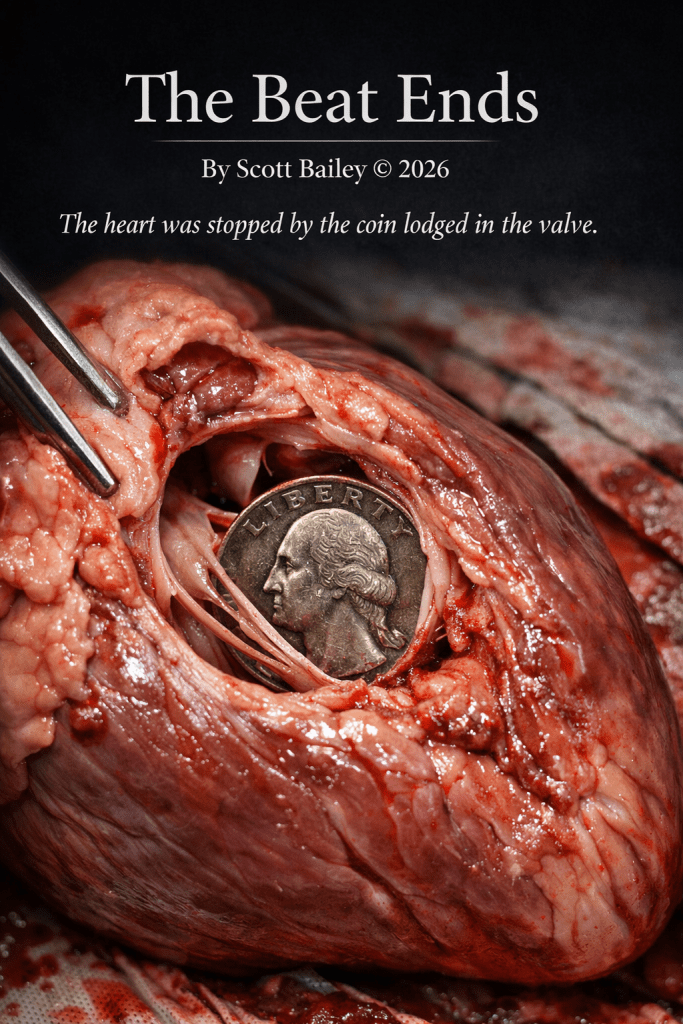
By Scott Bailey © 2026
The heart was stopped by the coin lodged in the valve.
In response to malformed_poetry’s prompt
https://www.threads.com/@malformed_poetry/post/DV3lbV9jB1o?xmt=AQF0APpQECkryQNkTsLM5knt76agVGjtnuqj_WHAX1okkTyYetK1q2aW9T84EPC0cD_wmbYG&slof=1
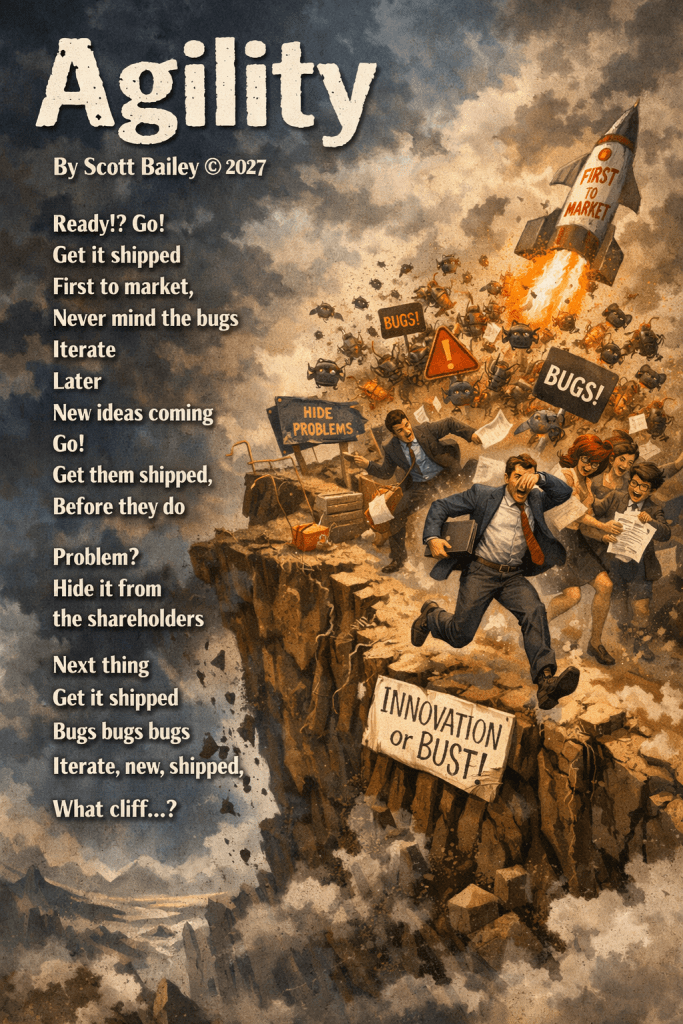
By Scott Bailey © 2027
Ready!? Go!
Get it shipped
First to market
Never mind the bugs
Iterate
Later
New ideas coming
Go!
Get then shipped
Before they do
Problem?
Hide it from the shareholders
Next thing
Get it shipped
Bugs bugs bugs
Iterate, new, shipped,
What cliff…..?
In response to malformed_poetry’s prompt
https://www.threads.com/@malformed_poetry/post/DV0_SnZjbLP?xmt=AQF0OopKea-6RAoa5lsLFQEEB1CnXmQZwVIuIQhLrI0AHxp7794yj-bag-KTZi8N3WfWyQrg&slof=1
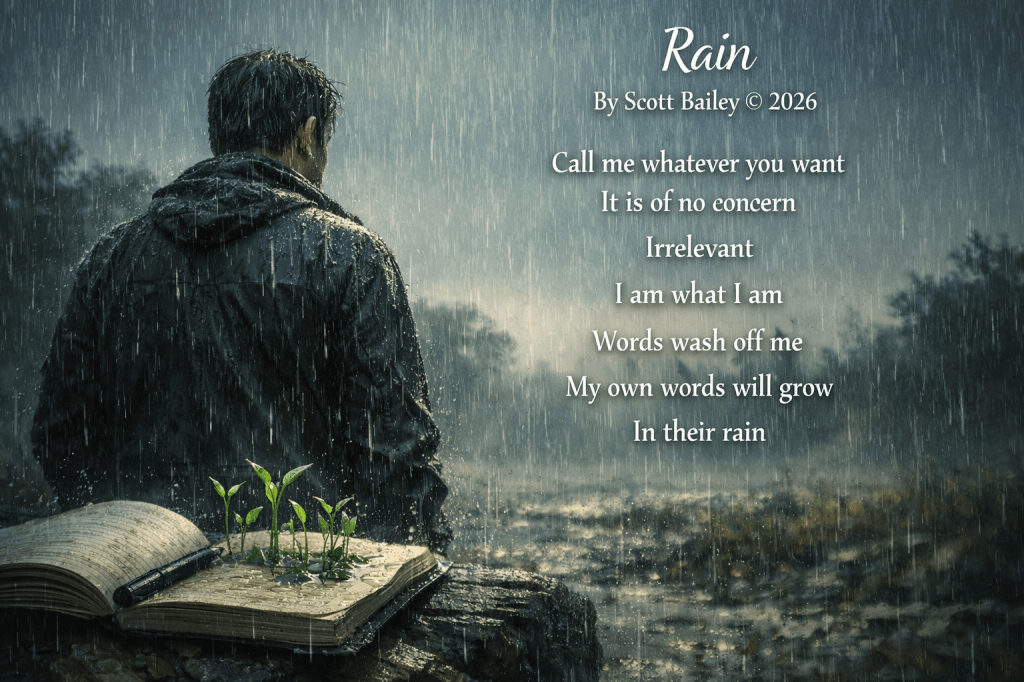
By Scott Bailey © 2026
Call me whatever you want
It is of no concern
Irrelevant
I am what I am
Words wash off me
My own words will grow
In their rain
In response to malformed_poetry’s prompt
https://www.threads.com/@malformed_poetry/post/DVyaMWGia6S?xmt=AQF0zAO3Qyd0kacwqPtvW4O7_hyCWgOUbh0atl3FAsaVkNo4ZsqDS-IvwjbxDKBLBi3j6m4&slof=1
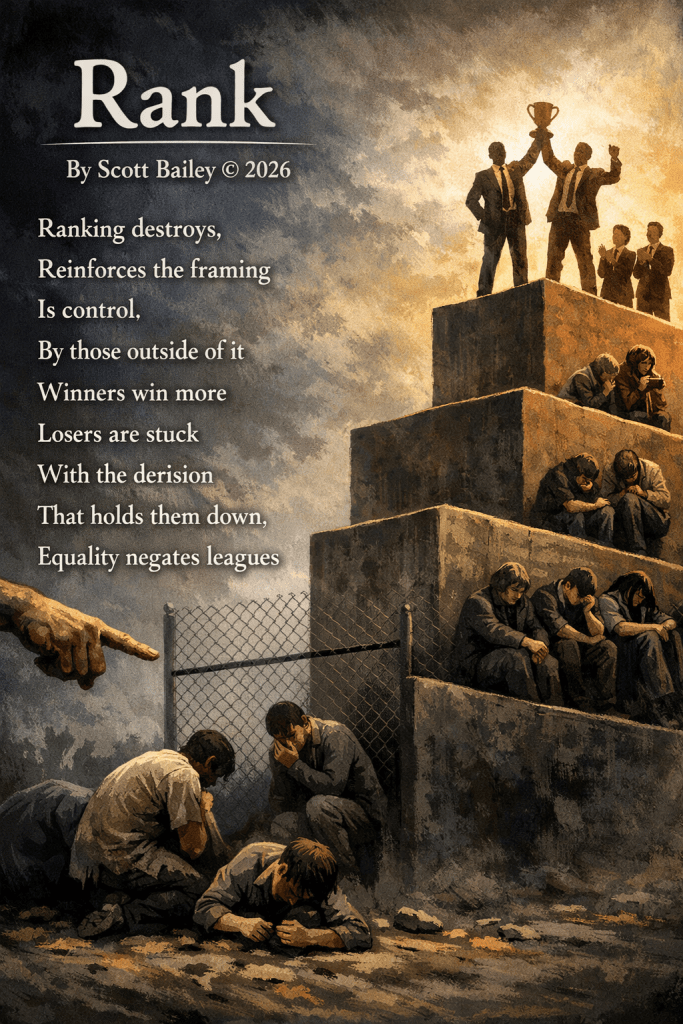
By Scott Bailey © 2026
Ranking destroys
Reinforces the framing
Is control
By those outside of it
Winners win more
Losers are stuck
With the derision
That holds them down
Equality negates leagues
In response to malformed_poetry’s prompt
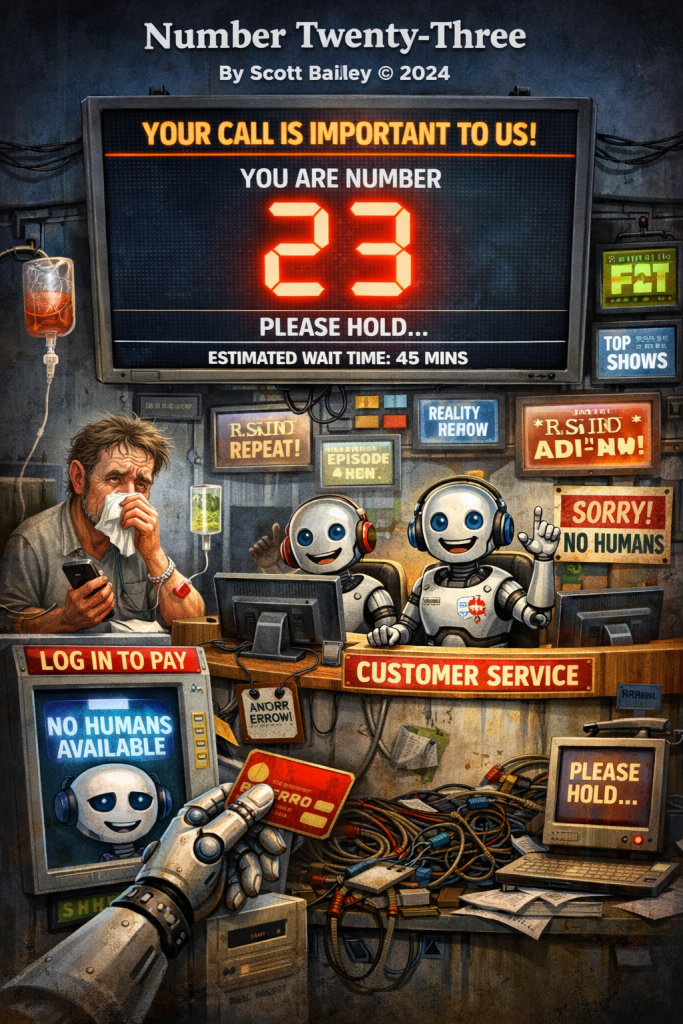
By Scott Bailey © 2024
You’re number twenty-three in the queue
Your call is very important too.
Though you might be dying or have the flu.
We are doing our best not to treat you.
We have, for you, a million great shows!
But here’s the secret no one knows
Our user interface really blows
To magnify our tiny pool of shows!
We would love to lend a helping hand
Log onto our bank it’s nice and bland.
No humans here, they’ve all been banned.
Help is strictly bound and planned.
By Scott Bailey © 2026
You a square
A nerd, a regular guy
They said
That’s what they saw
They missed the depth
I am cubed, irregular, weird
Infinite
Spiralling
Spiralling

In response to malformed_poetry’s prompt
https://www.threads.com/@malformed_poetry/post/DVqq9KxAVD8?xmt=AQF05TtOY3ZAKH108g_kQhxdqHPXEWNtxzRPTRJxgqD5PwM1_4VykF_B0hx1bMdkQUkW5mx_&slof=1
By Scott Bailey © 2026
Your dogs chin on your knee
Bills paid
A cup of tea
Simple joys
What most of us crave
Beyond all the noise

In response to malformed_poetry’s prompt
https://www.threads.com/@malformed_poetry/post/DVoHuCXDPDd?xmt=AQF0kZCXWvEAL6GYSkW1jrduy97IzM3qrjKa7leQdmjMP4yrU5__eOIIyR-G0pn6Nd2vq-sL&slof=1
By Scott Bailey © 2026
The far side of the moon
Is not dark, actually
It is illuminated by the madness
Of tortured talent
Contemplating time and money
And impending death
Singing into the sky
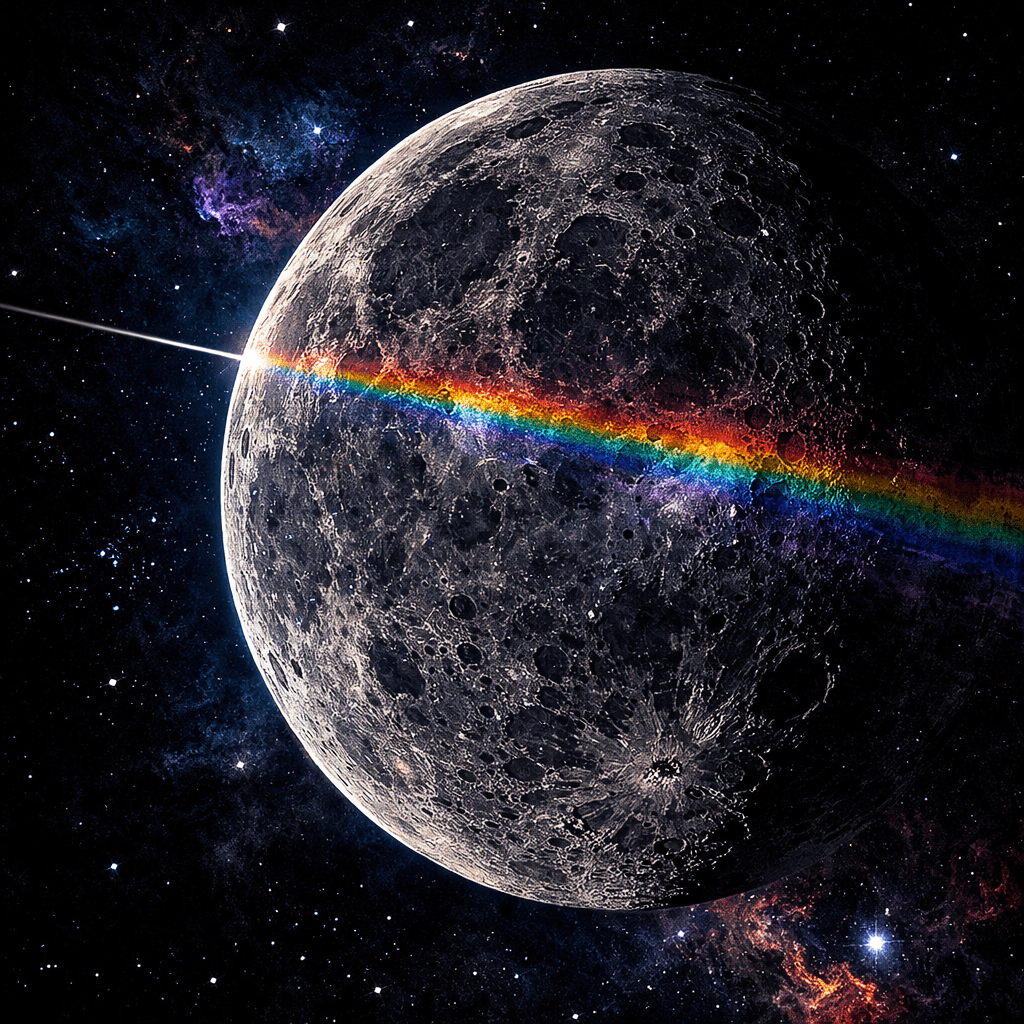
In response to malformed_poetry’s prompt
https://www.threads.com/@malformed_poetry/post/DVljwzTjAOK?xmt=AQF0ijTRGE28IzF65c8PqQj2lD6KO6Ux2IAN4WdQwR8R16RjRH1EC8I-bQjDzpE-TfWS8PDw&slof=1
By Scott Bailey © 2026
Anxiety starts at the foot of my bed
Beyond the impenetrable shield of the duvet
Out there, where things matter
The weight of the world awaits
Only heroes and fools venture beyond
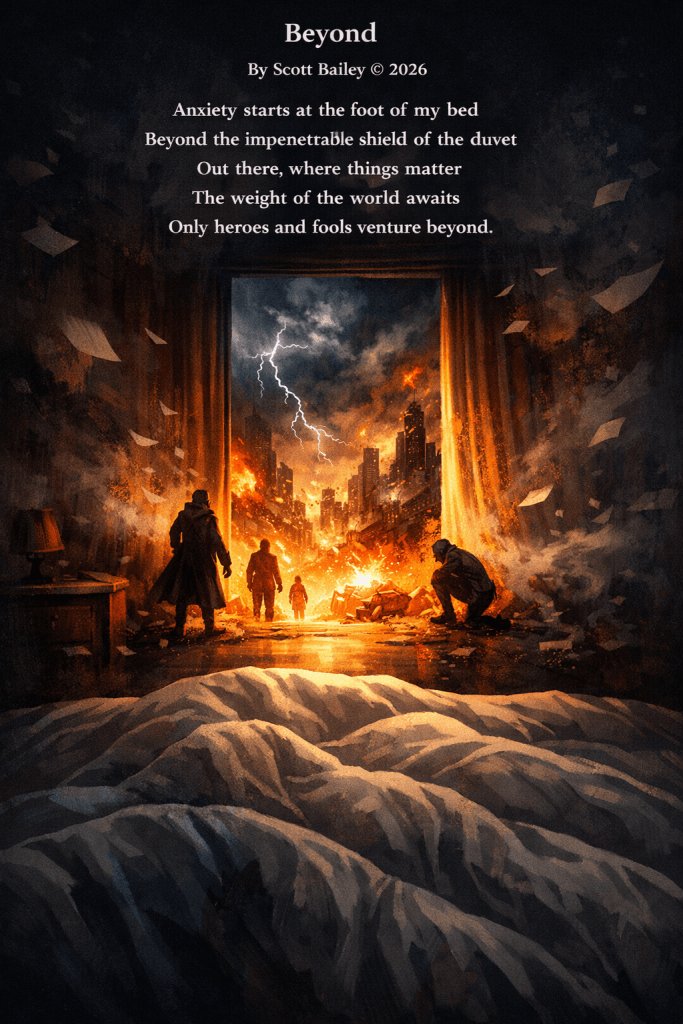
In response to malformed_poetry’s prompt
https://www.threads.com/@malformed_poetry/post/DVjCqLeDDTY?xmt=AQF0F__KOqAJJuMXeg8c39PgpHbyrhf_vv4jLzM_H7vY_c77hf-7Ed_kGXcvVfifx3mJfFtI&slof=1
By Scott Bailey © 2026
Against the backdrop of the stars
In floats
Frozen
Preserved
A book
One day
Alien eyes might find it
Decode it
Understand it
Learn about the world
That discarded such things
And why it died

In response to malformed_poetry’s poem
https://www.threads.com/@malformed_poetry/post/DVgXwLPDFyo?xmt=AQF0MJiuJr8yIQVNq_B8_feG9kAAS8wE8NWveACcfvS9GdoA0MairteAKO6Md8FxrzrrII8&slof=1
By Scott Bailey © 2026
After all, we are shameful
Stupid and disgusting
Expendable
No wonder
We are falling
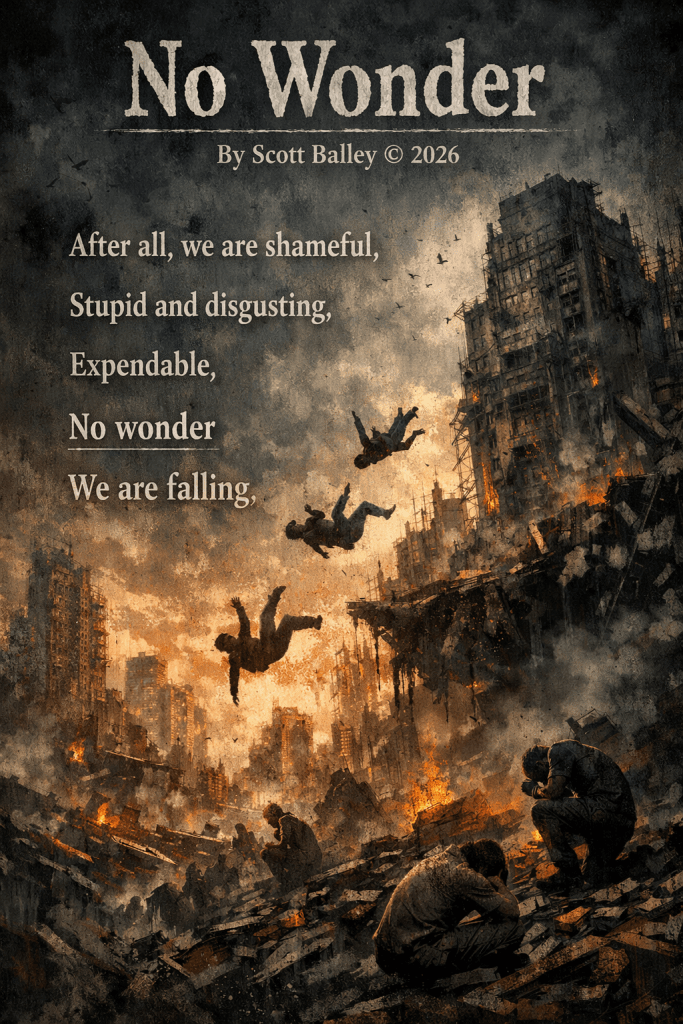
In response to malformed_poetry’s prompt
https://www.threads.com/@malformed_poetry/post/DVd0NfSDCV5?xmt=AQF05zfA5VykjcQ12M9W7Zx-EcK5mBjbVo6jryreOr27J28n2pnCKFDqGwuMpBwmIEhaY0J8&slof=1
By Scott Bailey © 2026
The wind will carry all kinds of litter
I watch it go, feeling bitter
There I am a bitter sitter
Weary of the time I fritter
Wearied by what the wind won’t take
By design or by mistake
My ageing mask begins the flake
My solid core begins to shake
Because the wind won’t take my pain
My grief and regret it does disdain
And it will not deign to explain
So the wind will ever be my bane.

In response to malformed_poetry’s prompt
By Scott Bailey © 2026
What madness is this?
Words on a mind
Defining words
Enclosing words
Words as chains of judgement
Knowledge from the past
That’s creeping back
Like a disease
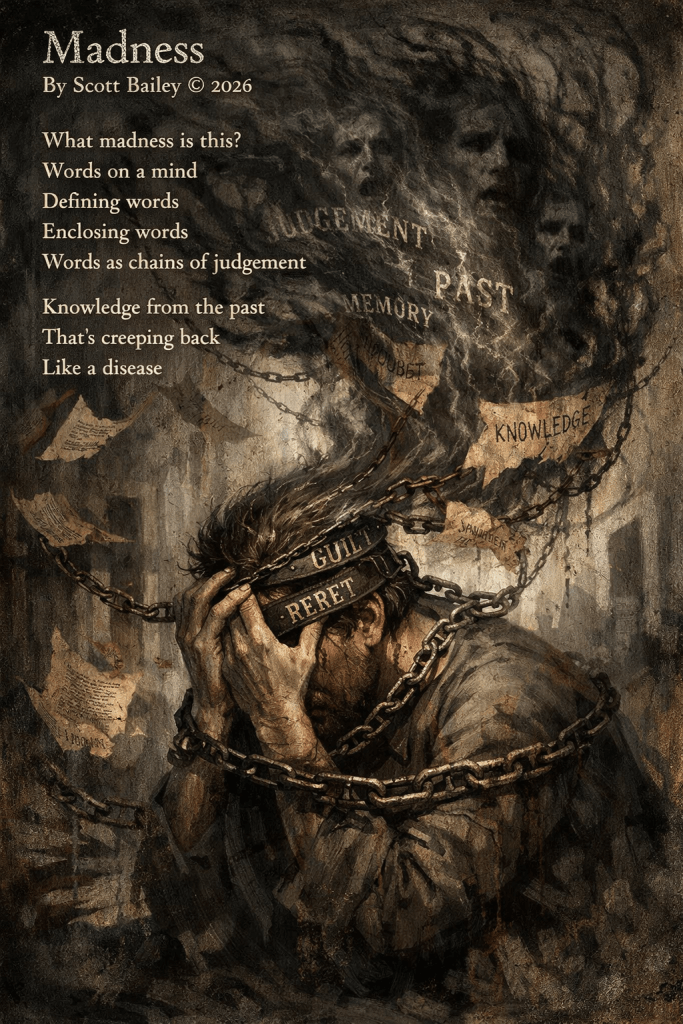
In response to malformed_poetry’s prompt
https://www.threads.com/@malformed_poetry/post/DVYrhLmDJwk?xmt=AQF0tmVXOOzh-g_cJ5tCjI_vCyB8Vao_lthIE5yLgaUMM7xbQzLlRi18rDfd0ORn7Fb31zI&slof=1
By Scott Bailey © 2026
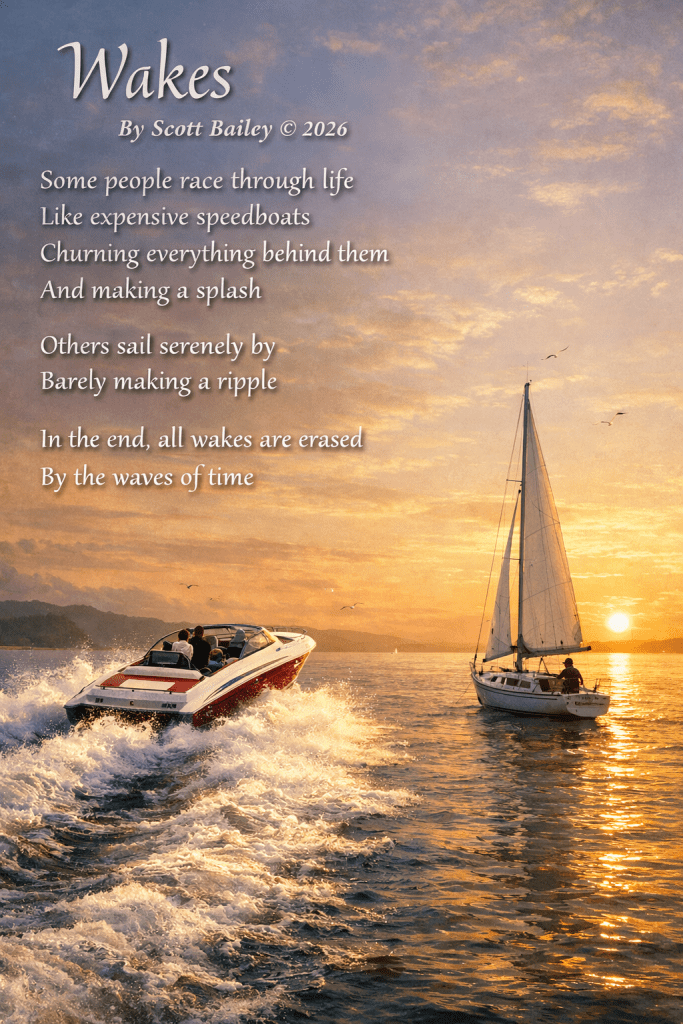
Some people race through life
Like expensive speedboats
Churning everything behind them
And making a splash
Others sail serenely by
Barely making a ripple
In the end, all wakes are erased
By the waves of time
In response to malformed_poetry’s prompt
https://www.threads.com/@malformed_poetry/post/DVWH_DpiH8l?xmt=AQF0cGEkwT_fKa1x3UglpHoN04VZZ3paNwbJELzNFhyUnspLIYUzN9hInellf9mHPmIqsYM&slof=1
By Scott Bailey © 2026
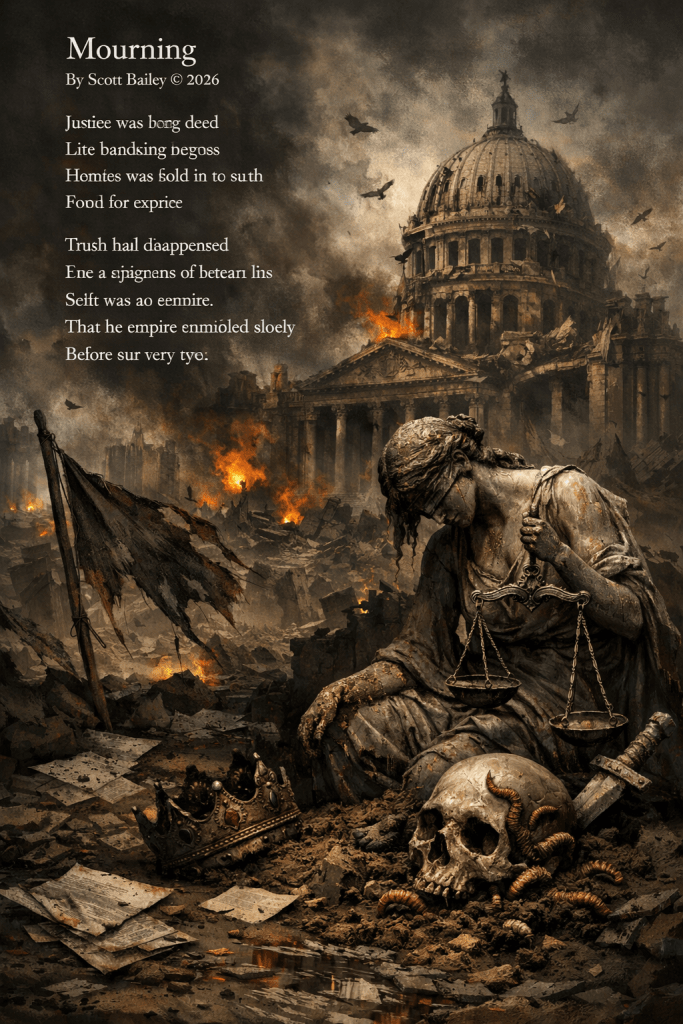
Justice was long dead
Law breaking fragrant
Honour was cold in the earth
Food for worms
Truth had disappeared
Into a quagmire of blatant lies
So it was no surprise
That the empire crumbled slowly
Before our very eyes
In response to malformed_poetry’s prompt
https://www.threads.com/@malformed_poetry/post/DVTjUsiEztt?xmt=AQF0Wm9nzU92Qm9Fopqa3xf6CiWXasKvDDoIP1G2Kwv0D10-qhMVp5vw7ylge2KdrRqtiEM&slof=1
By Scott Bailey © 2026
I take comfort
In home
In family
In security
In peace
In friends
In dependability
So anyone espousing policies
Defending these
Is desperate and suspicious

In response to malformed_poetry’s prompt
https://www.threads.com/@malformed_poetry/post/DVQ6aEiEjIN?xmt=AQF02FN-WoH43rtBscKNOW1G_oyZJc4YcuBZsGzK9lMzA5IvxBUBsLoYMY1bBm-4y56jFvyv&slof=1
By Scott Bailey © 2026
Brushed and teased
Carefully lifted from the foamy earth
Intricate gold and jewels
With no discernible function
Must be ritualistic

In response to malformed_poetry’s prompt
https://www.threads.com/@malformed_poetry/post/DVOWgnHEre2?xmt=AQF0lOloPVrwhONSN1ah1LN_yNqCpHnc-Piy4zfobUVS-hNEiehRWjvg9ddT8qV46G3gEIhT&slof=1
By Scott Bailey © 2026
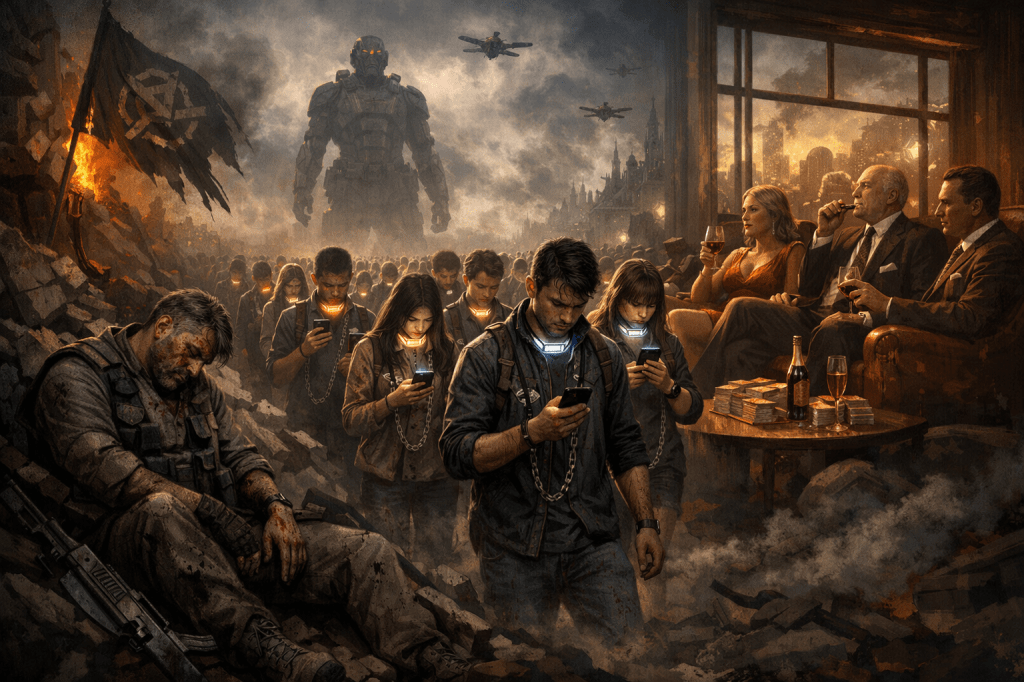
The last of the resistance
Faded
Dragged down and overwhelmed
The next generation
Live in ignorance
Unaware of their chains
While the rich choose their prey
In response to malformed_poetry’s prompt
ww.threads.com/@malformed_poetry/post/DVLxL4aggFi?xmt=AQF0cVgjd39ksHK90NBHVdeSrb8kQM3-sPNL0BRT7OqoO8Kg6d
By Scott Bailey © 2026
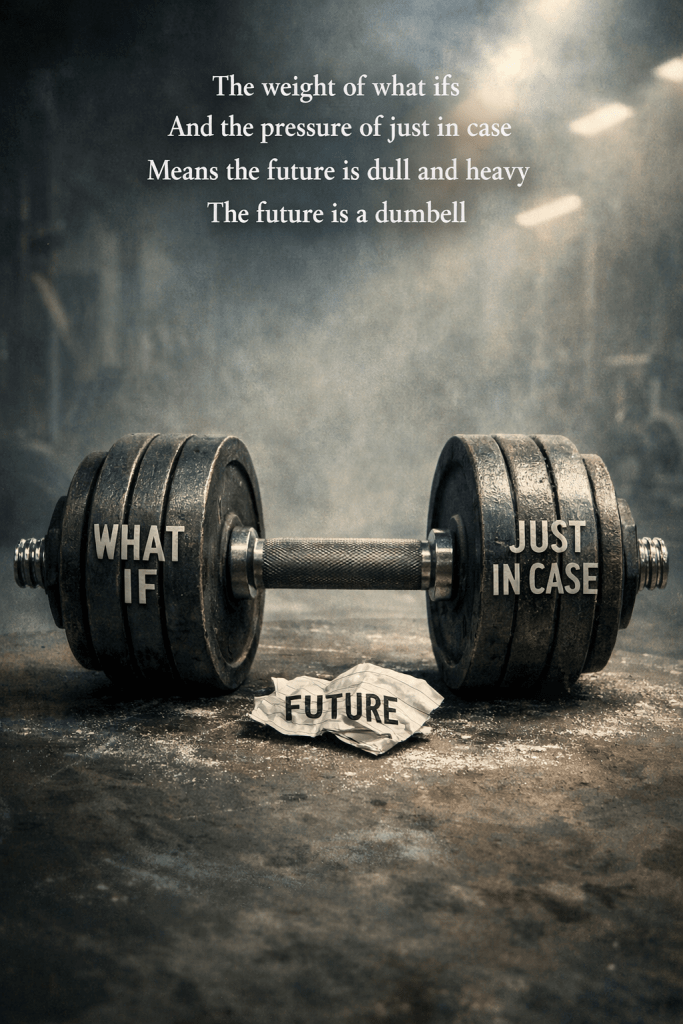
The weight of what ifs
And the pressure of just in case
Means the future is dull and heavy
The future is a dumbell
In response to malformed_poetry’s prompt
https://www.threads.com/@malformed_poetry/post/DVJMPSADoAl?xmt=AQF0yy2oVvj0AG5a59iGvFdNTySb1NUDE2hZcp3K-O5zvQAS3xwl5B4FMem0joD9iE4PBco&slof=1
By Scott Bailey © 2027
My words will be misunderstood
As they should
For your understanding is not mine
Therein lies the curse
And the gift
Of the poet
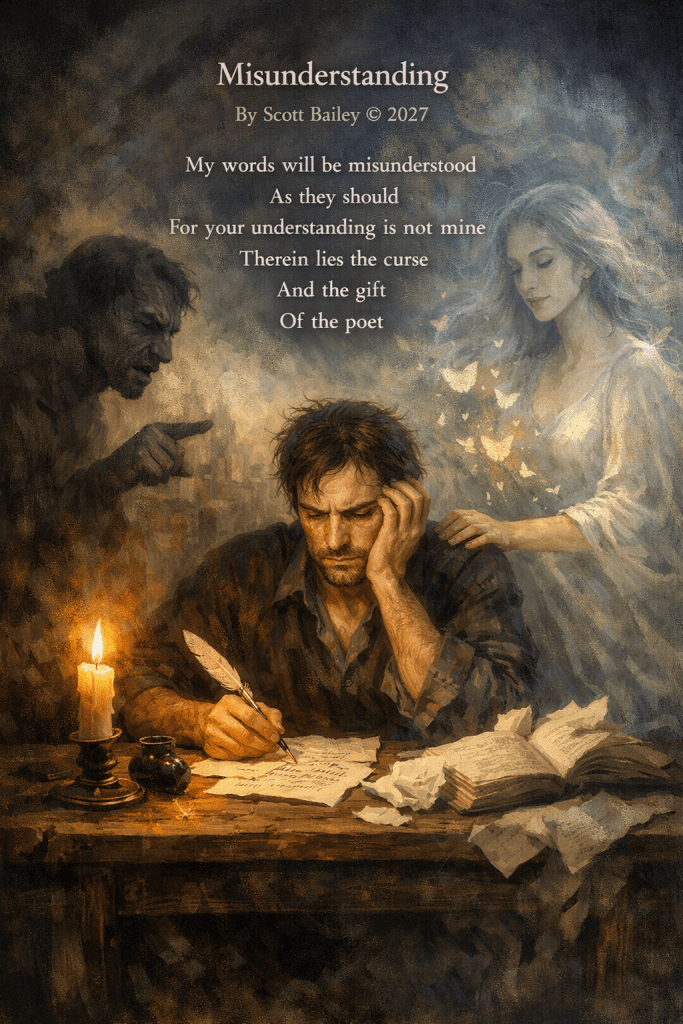
In response to malformed_poetry’s prompt
https://www.threads.com/@malformed_poetry/post/DVGpOA9j6uN?xmt=AQF0pqYsOMciUV4Xxm4DfGA1ot-vH-dIvC76OK1tvyGLyPzb-mmotJZDmRs8hxmqzGXsx10X&slof=1
By Scott Bailey © 2026
You have to roll the dice
To have a chance
Has become
If you roll the dice
You will surely win
This is the subtle lie
That breaks us when we’re old
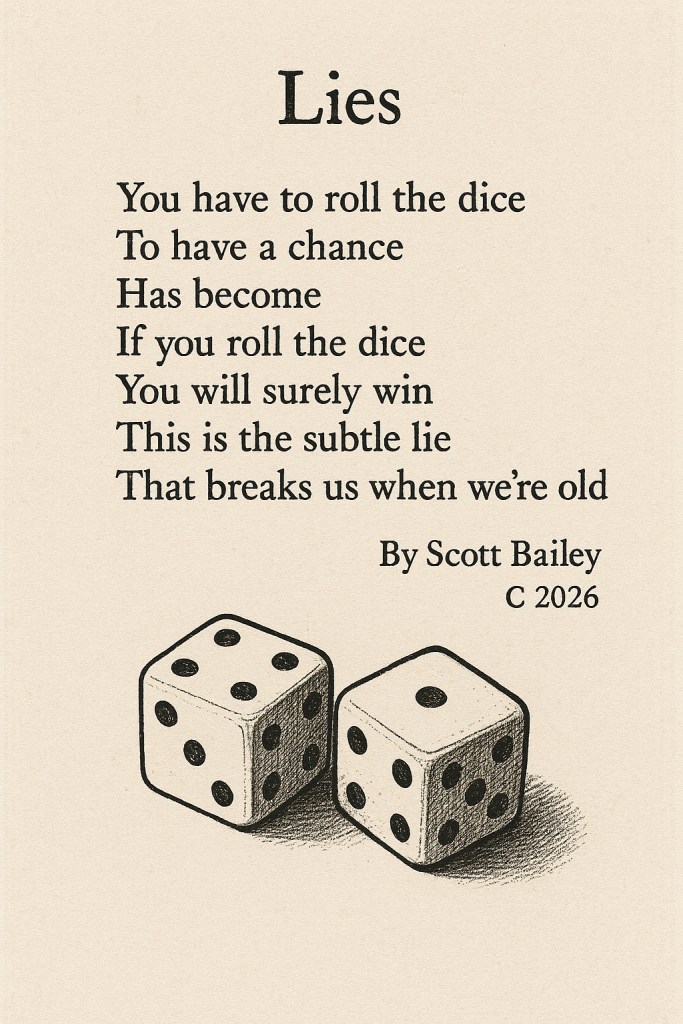
In response to malformed_poetry’s prompt
https://www.threads.com/@malformed_poetry/post/DVEHewEgiSn?xmt=AQF0XZJ-VyF8PdQSE2WUvuSQh1oGCGFP_hOL7-kmmmDKKkZLj1HfOHdX_YqbqfUNhAYfcmEN&slof=1
By Scott Bailey © 2026
Dragged up from the bottom
Into the higher echelons
Dizzy from the height
Uncomfortable
Not belonging
But unable to return
The bottom looks like hell
From this height
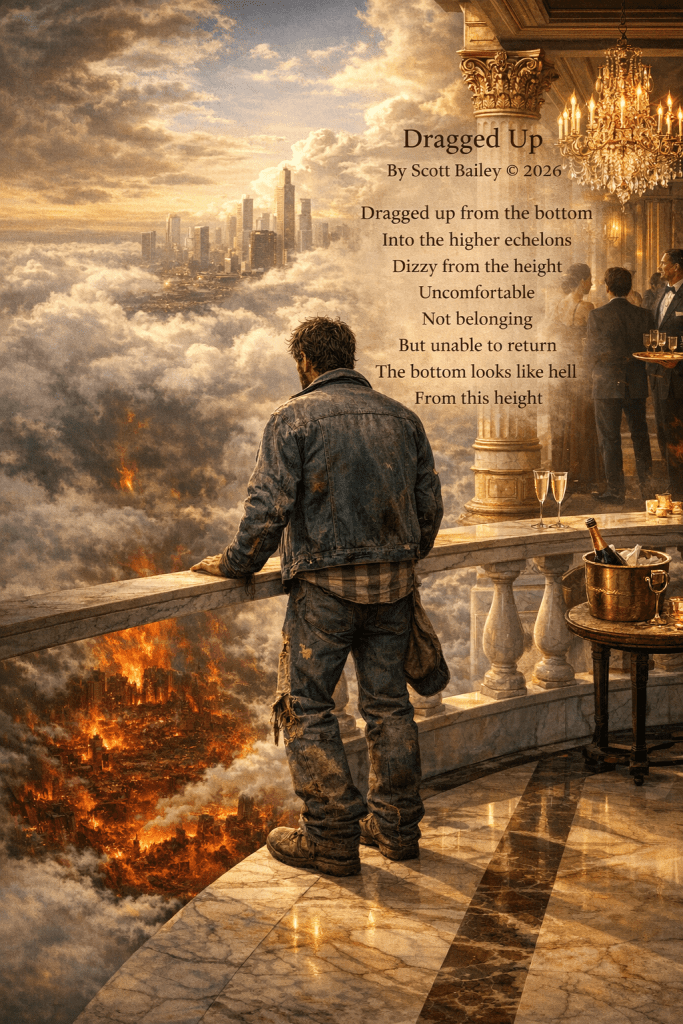
In response to malformed_poetry’s prompt
https://www.threads.com/@malformed_poetry/post/DVBi0Q5k5Kx?xmt=AQF0qmBJvjegv8QFJ1TVsUEdIK3x6zNRPmmf9umd52BIWSU1I6hLzLae1q2gOyibLQDyU2LL&slof=1
By Scott Bailey © 2026
The time between times
When worlds merge
We see with different eyes
Secrets from the other side
Shadows and whispers
That excites our nerves
As we glimpse other potentials
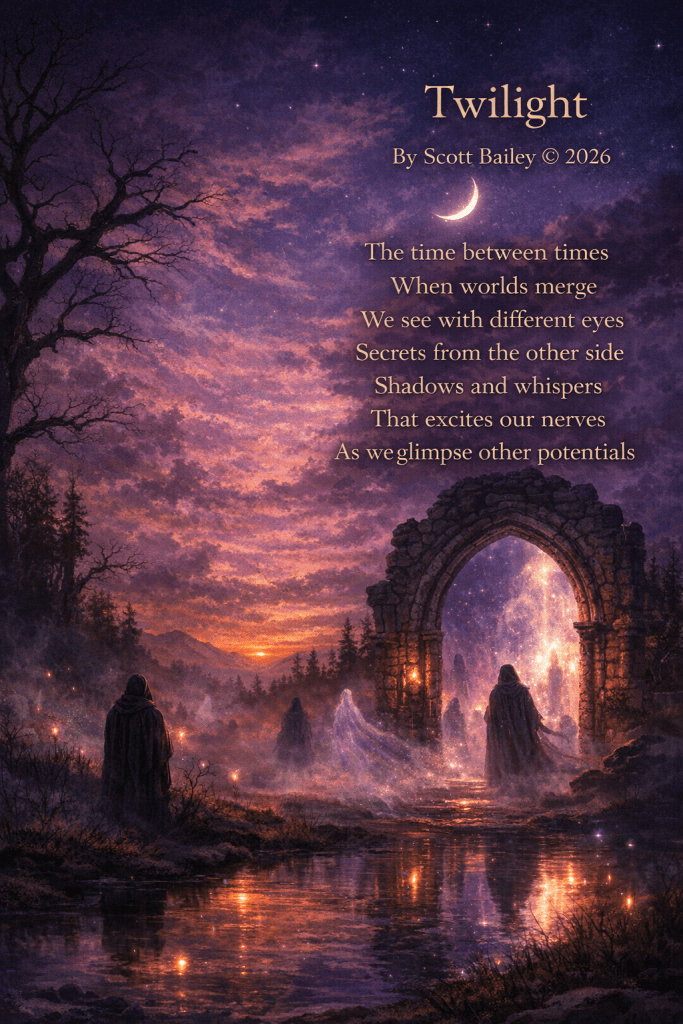
In response to malformed_poetry’s prompt
https://www.threads.com/@malformed_poetry/post/DU-7lCGjX8Z?xmt=AQF0X_PqrrKZuxBcMDVP0a73-GUmAPUpkRFPjf6yu-vpeYVJvpEnjmsH8vhI0863q1Ovgp3D&slof=1
By Scott Bailey © 2026
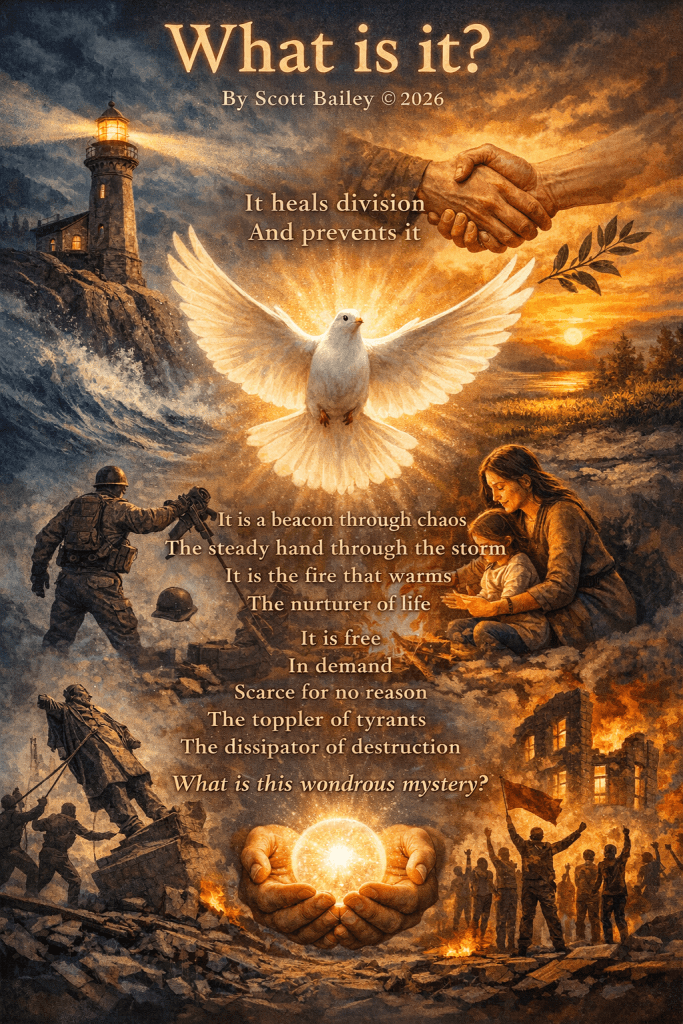
It heals division
And prevents it
It is a beacon through chaos
The steady hand through the storm
It is the fire that warms
The nurturer of life
It is free
In demand
Scarce for no reason
The toppler of tyrants
The dissipator of destruction
What is this wondrous mystery?
In response to malformed_poetry’s prompt
https://www.threads.com/@malformed_poetry/post/DU8Un1IjBMN?xmt=AQF0j1PXIHb_Ezs1zUeoXSh1T_ttc2VNP_BCU2ULaHPOBKowpq-MXDkV1nkubIJ9TbYtZ2TP&slof=1
By Scott Bailey © 2026
I am a calm man
I like to think
Slow to anger
Slow to act
Yet
Arrogance and entitlement
Inflames me
Takes my breath away
An allergic reaction
To stupidity

In response to malformed_poetrys prompt
By Scott Bailey © 2026
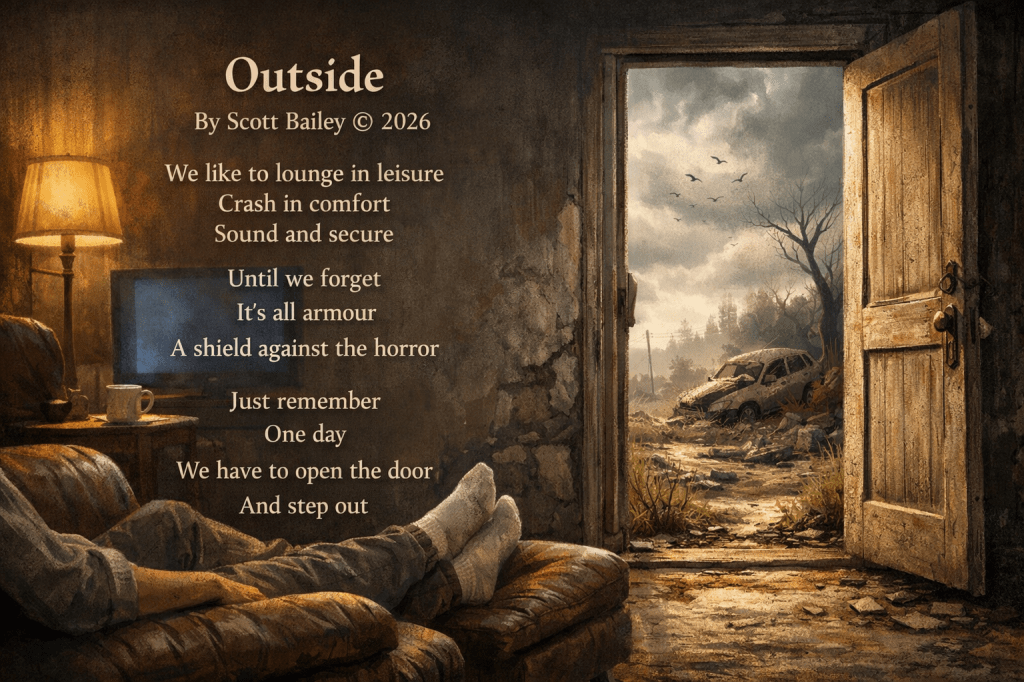
We like to lounge in leisure
Crash in comfort
Sound and secure
Until we forget
It’s all armour
A shield against the horror
Just remember
One day
We have to open the door
And step out
In response to malformed_poetry’s prompt
By Scott Bailey © 2026
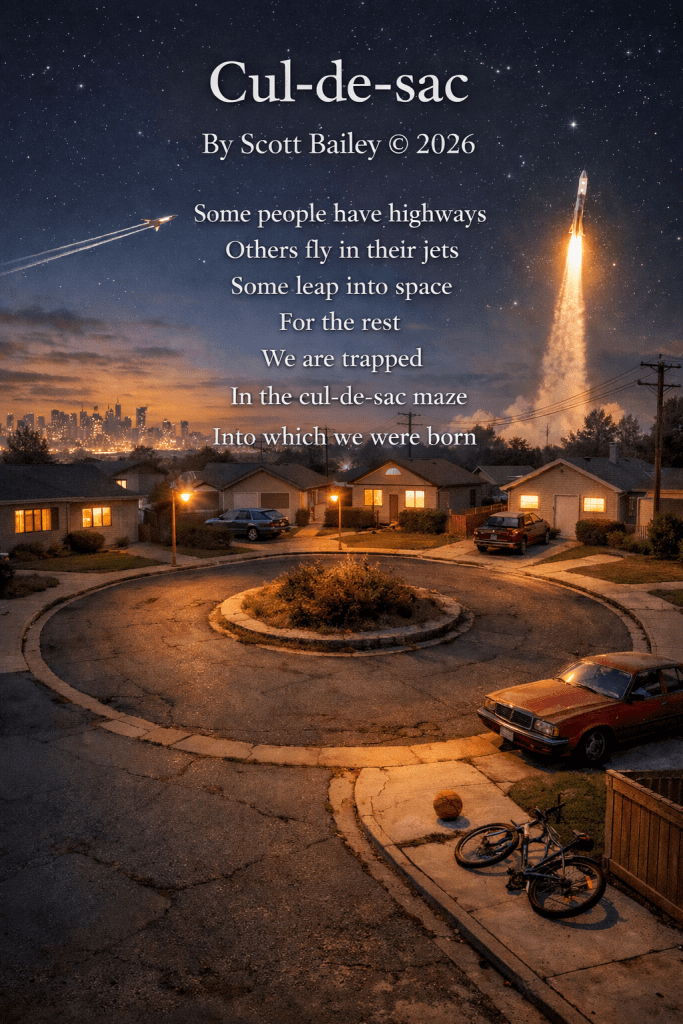
Some people have highways
Others fly in their jets
Some leap into space
For the rest
We are trapped
In the cul-de-sac maze
Into which we were born
In response to malformed_poetry’s prompt
https://www.threads.com/@malformed_poetry/post/DU0mUSckhwd?xmt=AQF0tstuE-kkyHmW1wZMbfUT8pXHP6aCnk-Wn1X4JVvUqLx3afMhG2upBe8GEwB03q3X61BH&slof=1
By Scott Bailey © 2023
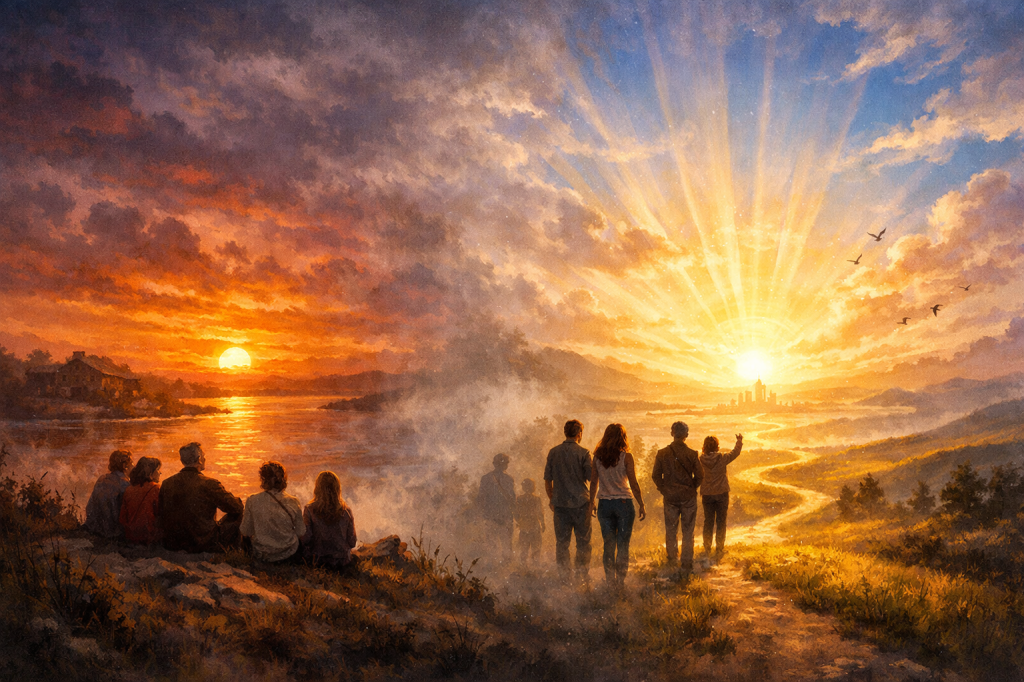
We watched the sun going down.
And deep inside
Every one of us
We yearned.
That primaeval wish.
That the sun would return, rise again.
And like it, we could return to the place we left.
We give the past much reverence
For its shrunken, diminished truth.
We should turn our eyes away
To the real sunrise of the morning
A give our awe
To the future.
By Scott Bailey © 2026
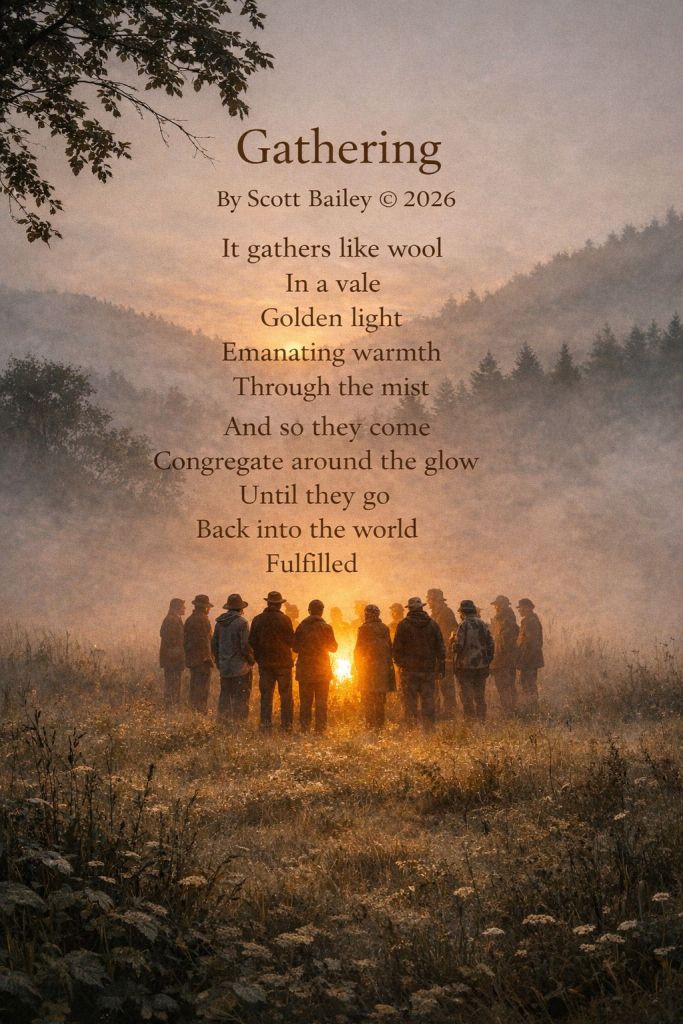
It gathers like wool
In a vale
Golden light
Emanating warmth
Through the mist
And so they come
Congregate around the glow
Until they go
Back into the world
Fulfilled
In response to malformed_poetry’s prompt
By Scott Bailey © 2026
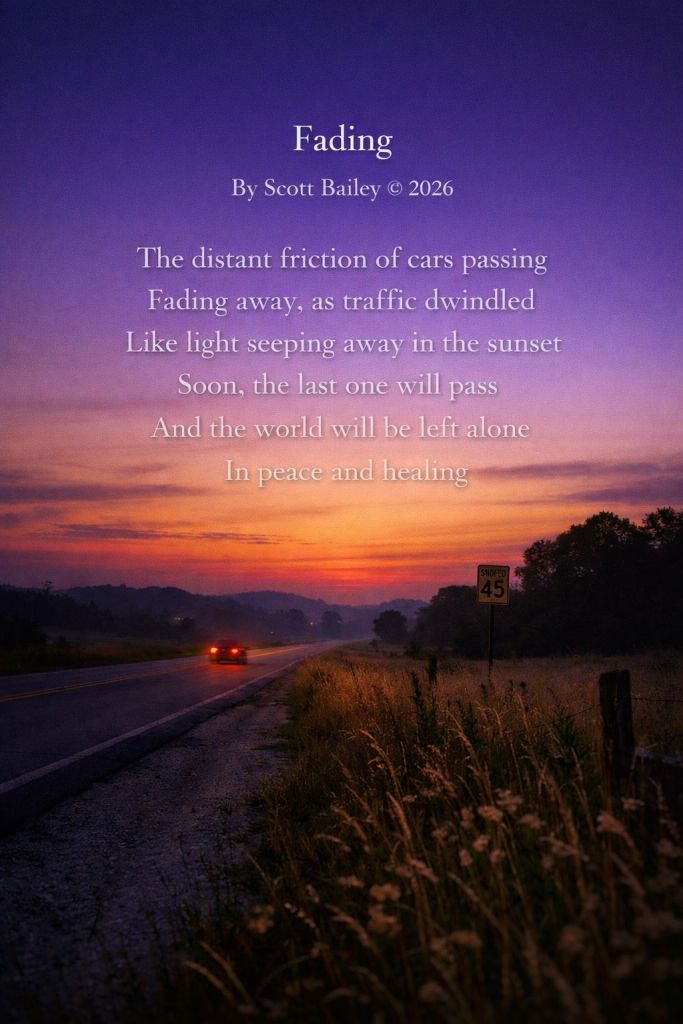
The distant friction of cars passing
Fading away, as traffic dwindled
Like light seeping away in the sunset
Soon, the last one will pass
And the world will be left alone
In peace and healing
In response to malformed_poetry’s prompt
https://www.threads.com/@malformed_poetry/post/DUs2meVjXNA?xmt=AQF0jLQ9FkU0XiwoG7hDGp89OBgoZuLt_Yh4fKQjwLd2FQ4RaxvP5sPfwG6U3k1R5X-V2Ds&slof=1
By Scott Bailey © 2026
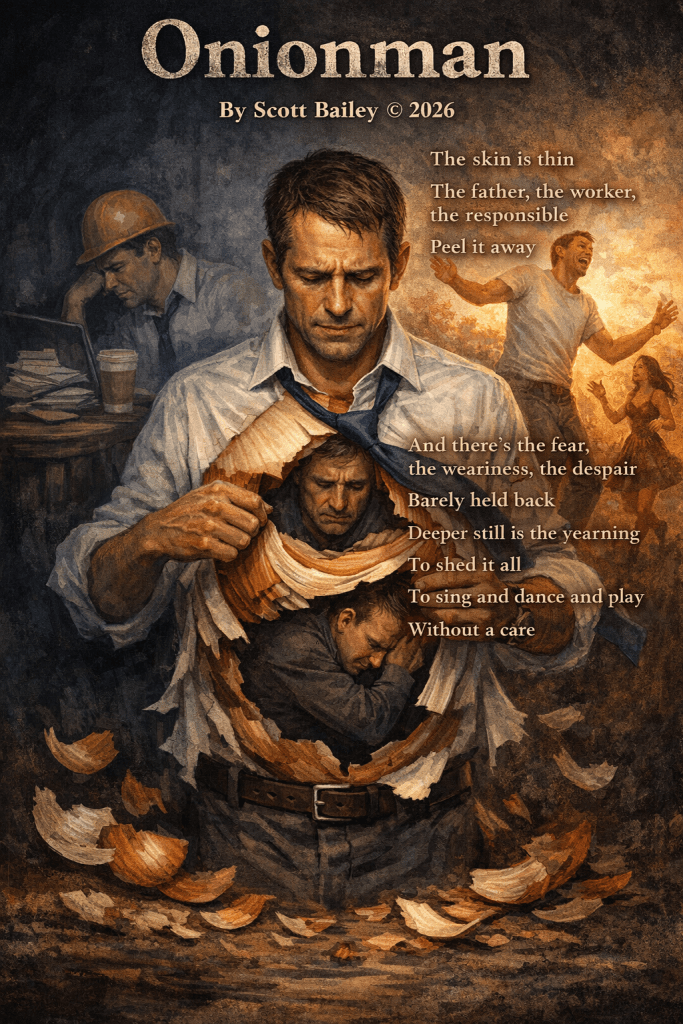
The skin is thin
The father, the worker, the responsible
Peel it away
And there’s the fear, the weariness, the despair
Barely held back
Deeper still is the yearning
To shed it all
To sing and dance and play
Without a care
In response to malformed_poetry’s prompt
https://www.threads.com/@malformed_poetry/post/DUqVcwagnzH?xmt=AQF0psI13VHVW0jWrPaRp-Qr0YkIBUVbJbNFbuaYwA_PgY1ljMHON7P7_7LFU_IEGcwcrLPW&slof=1
By Scott Bailey © 2026
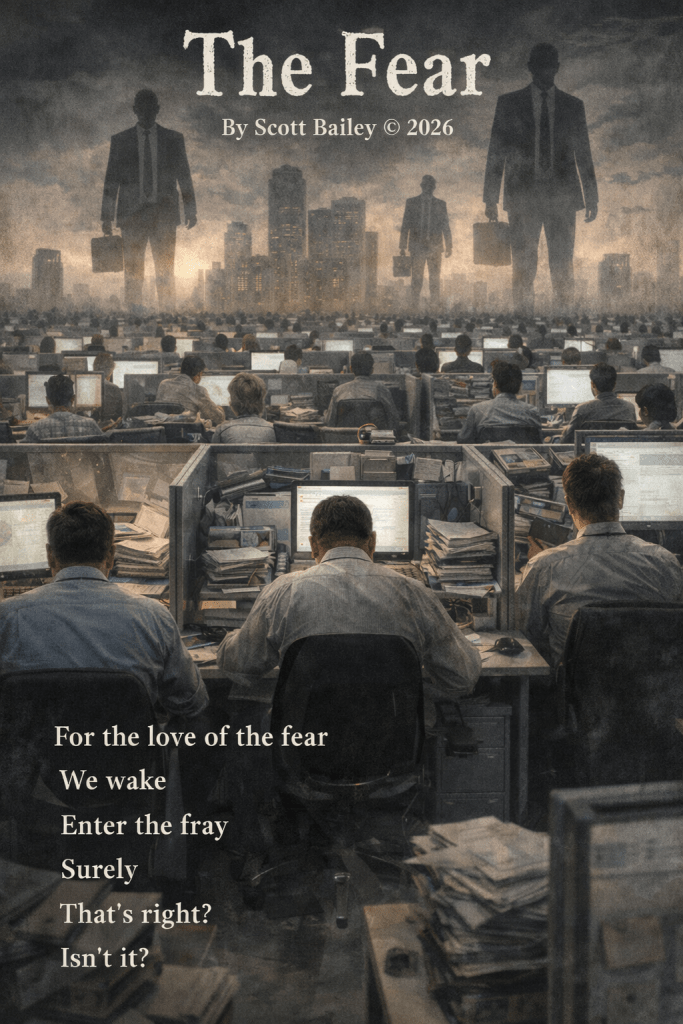
For the love of the fear
We wake
Enter the fray
Surely
That’s right?
Isn’t it?
In response to malformed_poetry’s prompt
https://www.threads.com/@malformed_poetry/post/DUnx0VEgg9W?xmt=AQF0_ujwR_zcbcBrwl8mQPFdLnAURGKwcJGT-FT681Z4aOjw2dG5BJIkqUr6wlfAnwi14Q8&slof=1
Scott Bailey © 2026
Words
Transferred
From mind
To mind
From nothing
To
Eternity
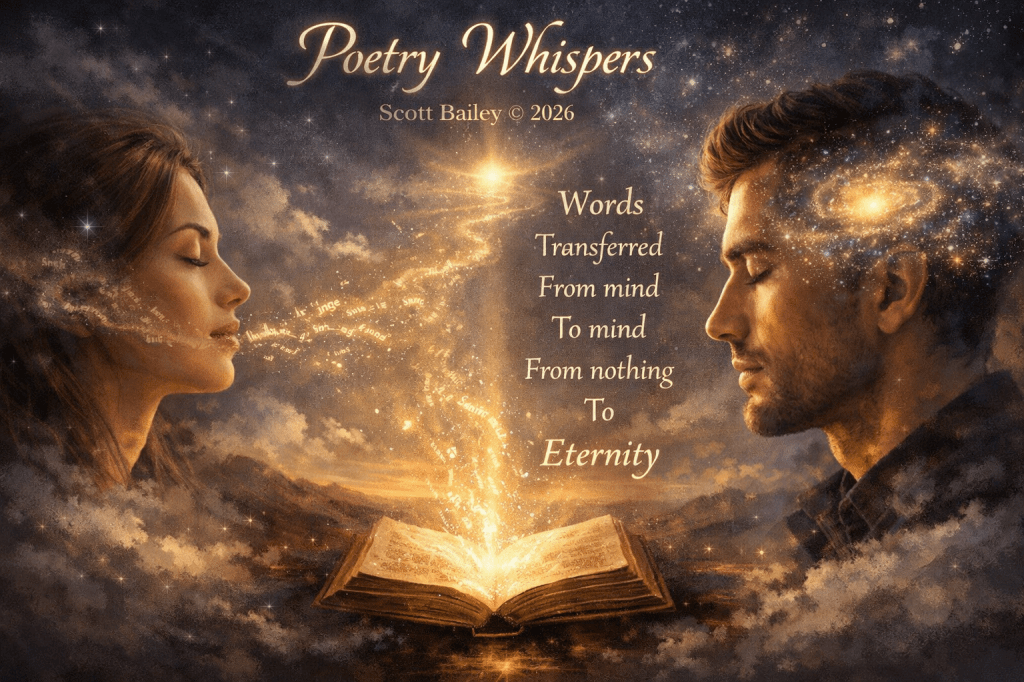
In response to malformed_poetry’s prompt
By Scott Bailey © 2026
It was a wonderful day
That they came
Bringing their science from the sky
Removing our problems
No more disease
No more poverty
Immortality
I wonder how
We’ll screw this up
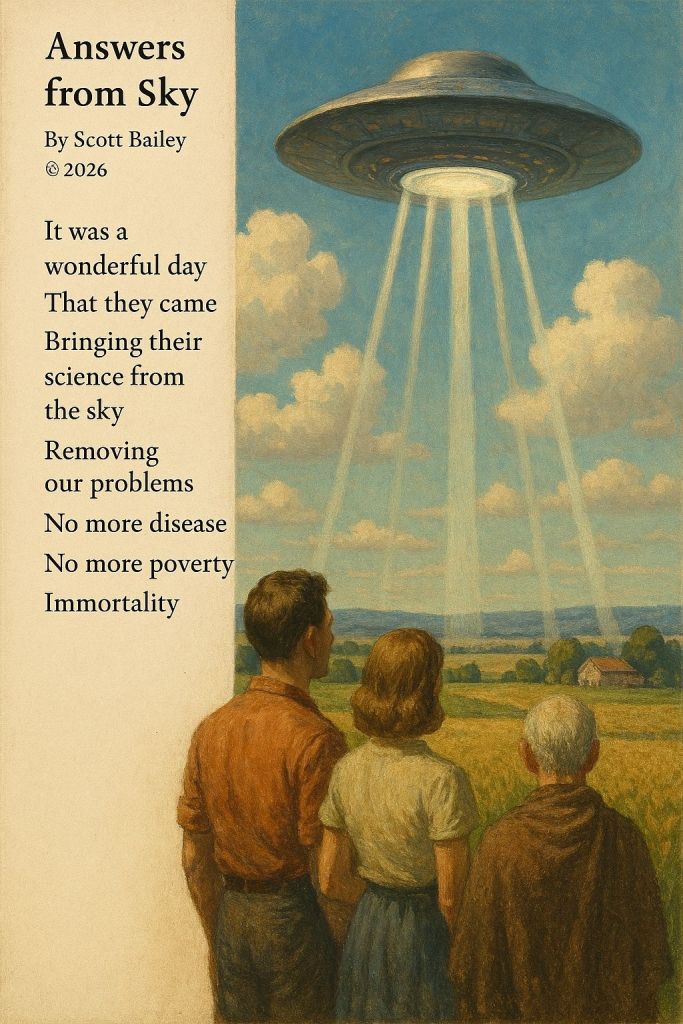
In response to malformed_poetry’s prompt
By Scott Bailey © 2026
He left words
That nobody read
Was there something there
They missed?
Will he be?
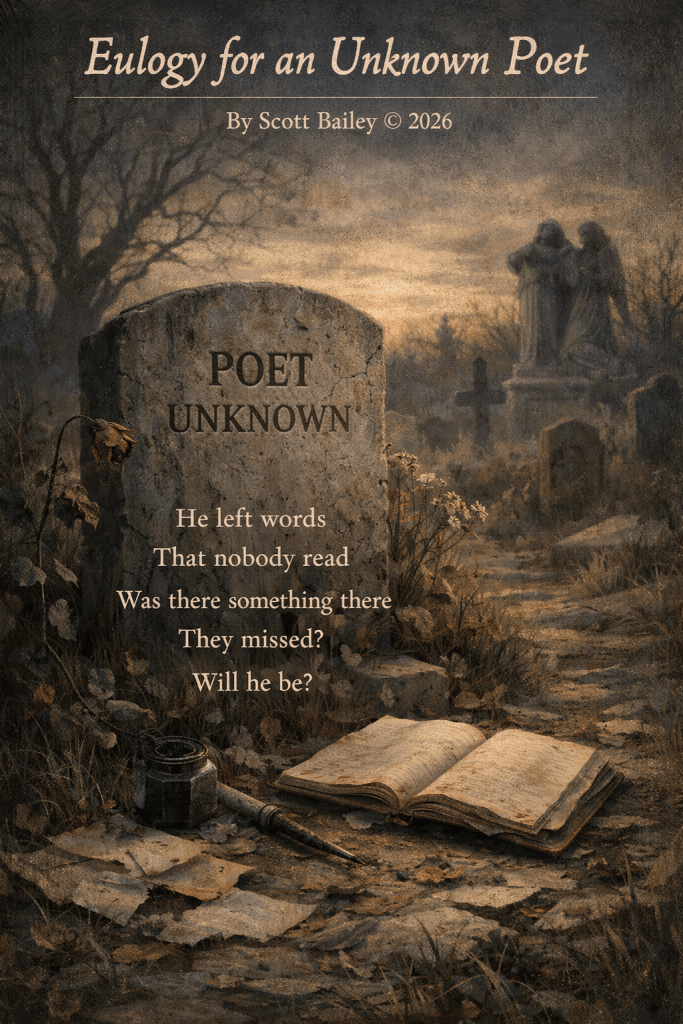
In response to malformed_poetry’s prompt
By Scott Bailey © 2026
We need her lullaby
To calm us
But we can’t hear her hum
Over the bluster
We need her warmth
To comfort us
But the wind blows cold
From our souls
We need her solidity
To support us
But the earth trembles
For our fears
We need her
We don’t have her
We forsook her
For our greed
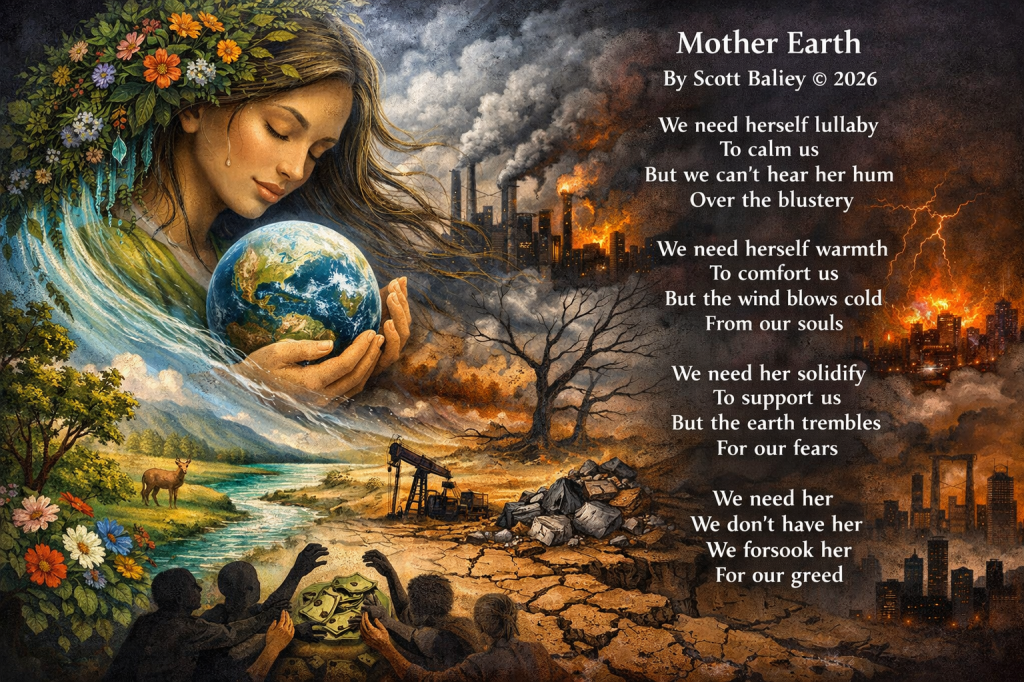
In response to malformed_poetry’s prompt
By Scott Bailey © 2026
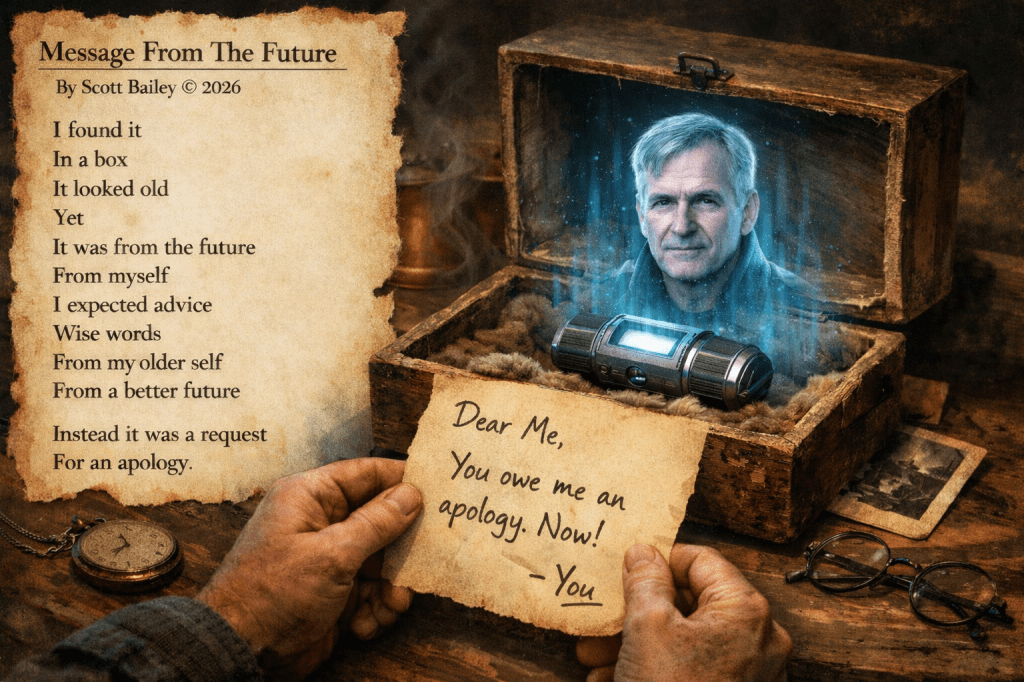
I found it
In a box
It looked old
Yet
It was from the future
From myself
I expected advice
Wise words
From my older self
From a better future
Instead it was a request
For an apology
In response to malformed_poetry’s prompt
https://www.threads.com/@malformed_poetry/post/DUa3BlrDOLv?xmt=AQF0FAz-_JWCllYc92y1xdZD_4XME-Zrsb2XOkmodZSqC__Wim5FAxPGwDk2FL5YhhgnUMCo&slof=1
By Scott Bailey © 2026
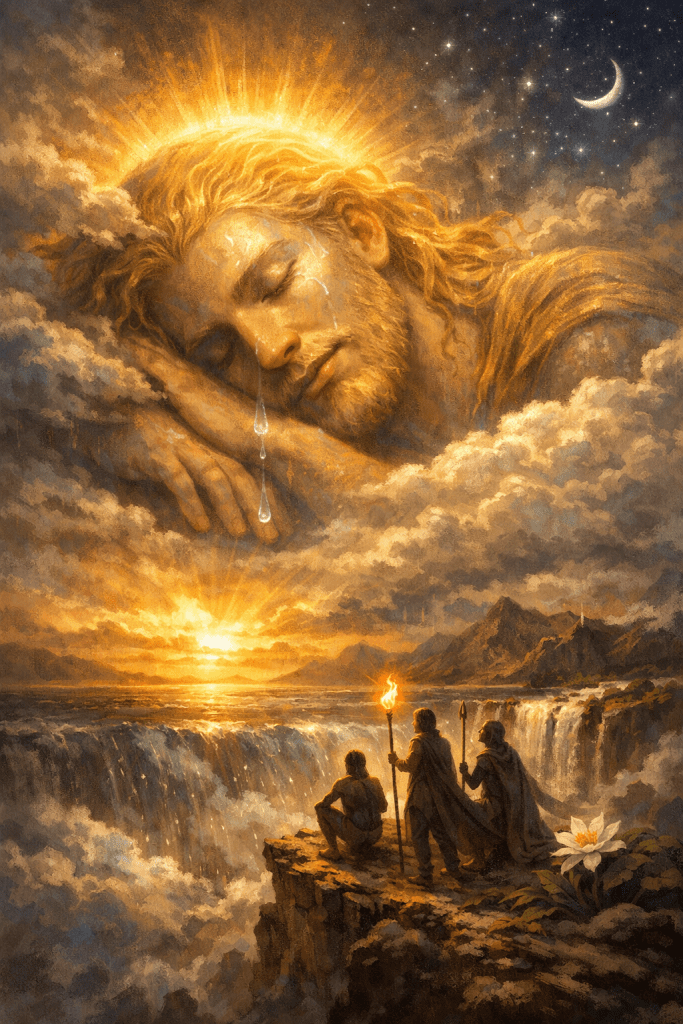
There is a God
Whose soul is bursting
With empathy and compassion
Whose very smile is sunlight
That blesses the earth
Nurtures life and love
Whose heartbeat is time itself
Whose breath is the breeze that soothes
Whose tears feed the Seas
That God sleeps.
When that God is needed
What do we need
To end that slumber?
In response to malformed_poetry’s prompt
https://www.threads.com/@malformed_poetry/post/DUYUsmFiLj7?xmt=AQF0927nS7H2yMaElMLS2vsMCh8nltPJfVl7v9dS84UmaOnPLeTHoXoJGusu4yRyo6jUn_eB&slof=1
By Scott Bailey © 2026
Greatness is within me
I am the one you all need
Victory will come easy
Everyone just follow me
This is destiny
High and mighty
Everyone says so
My path is clear
Our victory assured
Never doubt
Everyone trusts me, so
You just need to give me your credit card number

In response to malformed_poetry’s prompt
https://www.threads.com/@malformed_poetry/post/DUVtpLmiMhE?xmt=AQF0usIhR5B8Bb7Vy-nuxyxnz7fn5T36BgcUK60-huv51W41oBcIazwSADXLj_9HfzktvOc&slof=1
By Scott Bailey © 2026
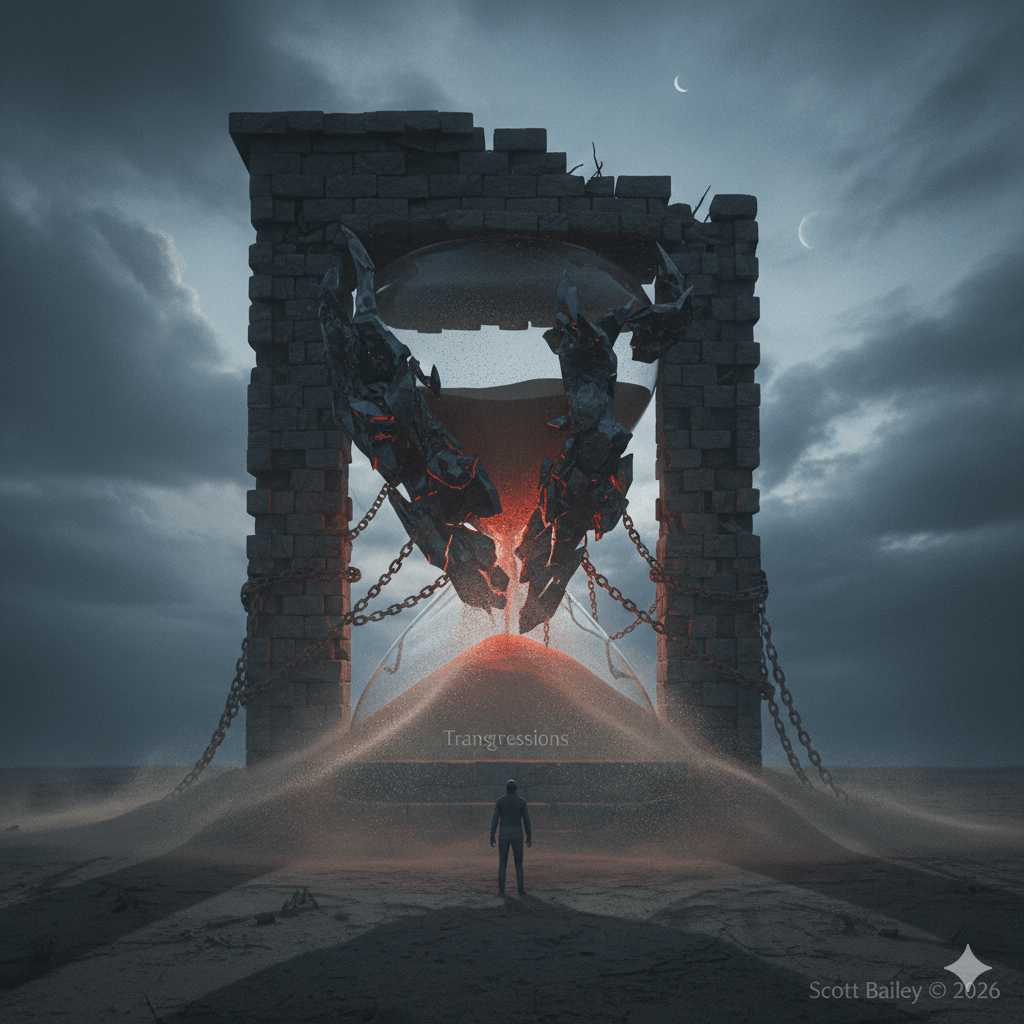
I have laid my transgressions in the arms of the past
Hoping
That the weight of time
Will bury them
Until they’re forgotten
It’s what we hope
But some transgressions
Are too big
To bury
In response to malformed_poetry’s prompt
https://www.threads.com/@malformed_poetry/post/DUTKOz4kl2p?xmt=AQF0Qk78uCCQ3eONcDlCeq7ZGzoqTaREfvvHMSZ2YcwmmWZiCmJelzp_OnzIUxWCbM7sKtY&slof=1
By Scott Bailey © 2026
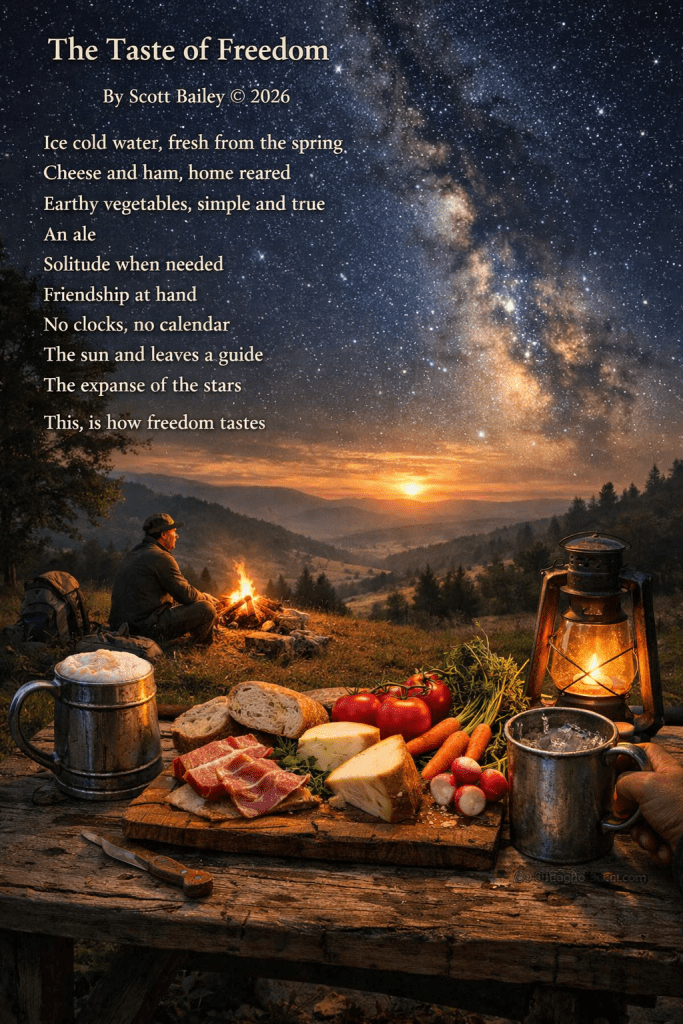
Ice cold water, fresh from the spring
Cheese and ham, home reared
Earthy vegetables, simple and true
An ale
Solitude when needed
Friendship at hand
No clocks, no calendar
The sun and leaves a guide
The expanse of the stars
This, is how freedom tastes
In response to malformed_poetry’s prompt
https://www.threads.com/@malformed_poetry/post/DUQoYjvia1C?xmt=AQF0UHP6DgxXYAdYTHMiUAYJrV8G6JNtjPw5AG7ypmFC6mBNM3jDHe9SiqjAVmJCKJqBiwO3&slof=1
By Scott Bailey © 2026
The poem
The words
Incisive
Inspired
That can reach into hearts
Change minds
Shift history
Leave the world a better place
That’s the poem
That, to my shame
I cannot write

In response to malformed_poetry’s prompt
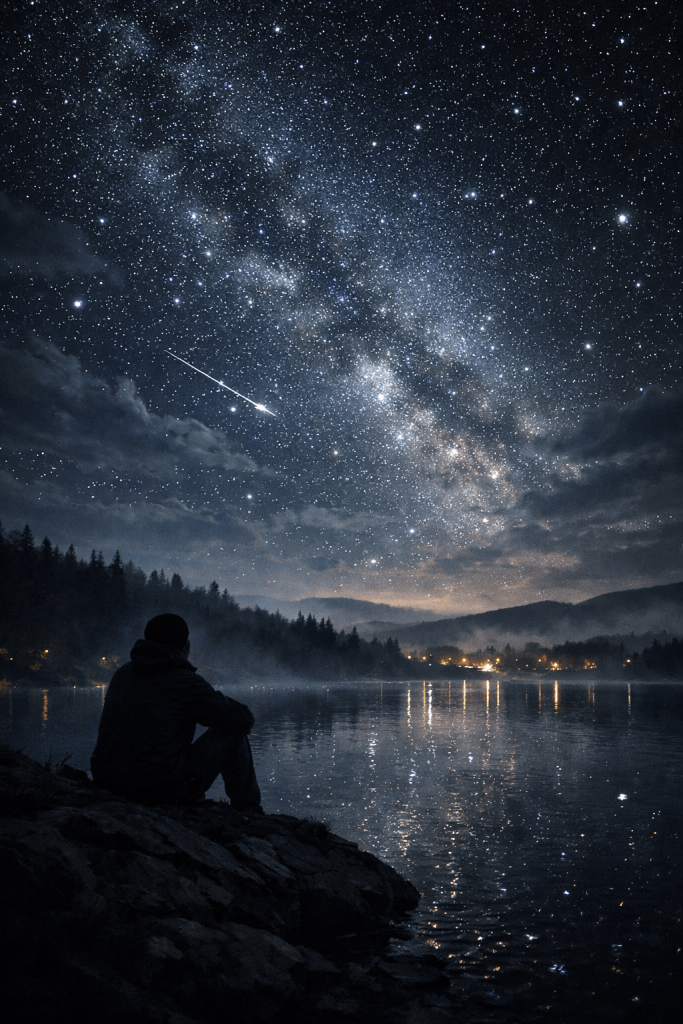
Scott Bailey © 2026
Gazing in awe
At the piercing stars
Light that reaches the deep
Of my heart
There is comfort in the night
In the soft distance of sounds
As the world
Sighs
There is comfort in the night
While you avoid the dawn
And what the light will reveal
In response to malformed_poetry’s prompt
https://www.threads.com/@malformed_poetry/post/DULgUFKk5_8?xmt=AQF0vuqEMfh_k0RyMpHgD-RPmGrVxfkEteRN0ltILdq0Jo2EnvyJfNrY3EO2LwXR6MUuIY8&slof=1
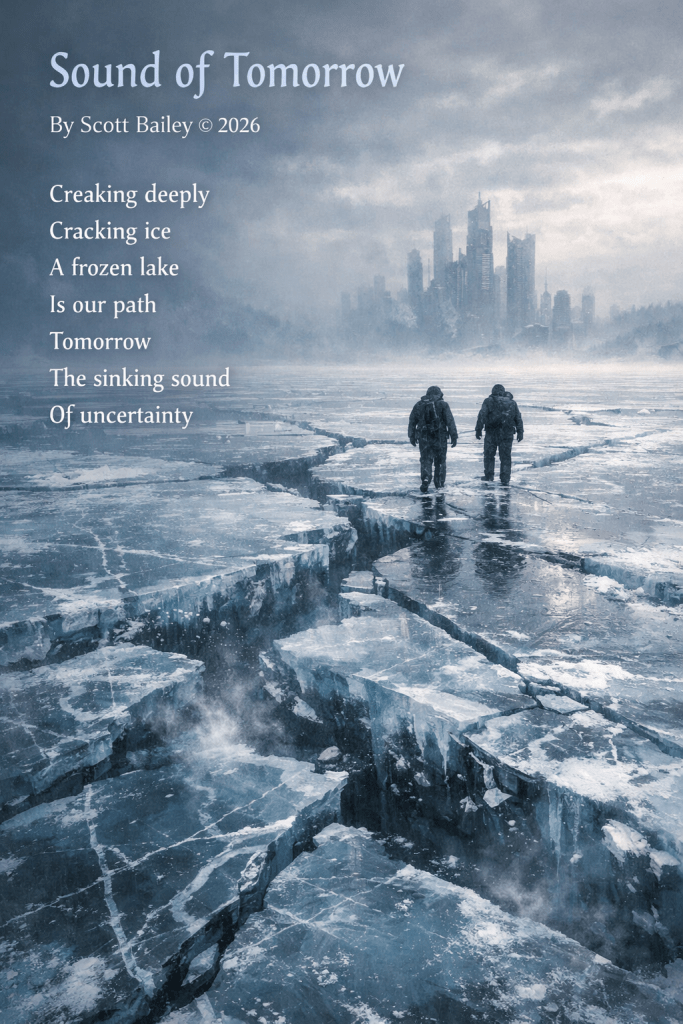
By Scott Bailey © 2026
Creaking deeply
Cracking ice
A frozen lake
Is our path
Tomorrow
The sinking sound
Of uncertainty
In response to malformed_poetry’s prompt
https://www.threads.com/@malformed_poetry/post/DUI18N-Efnu?xmt=AQF0VTqP-REV-wizzhi12wAEmZGlgM9Mgc9yrtiGynKezYWjBbtQicJDValpg8smlK8PSSS_&slof=1
By Scott Bailey © 2026
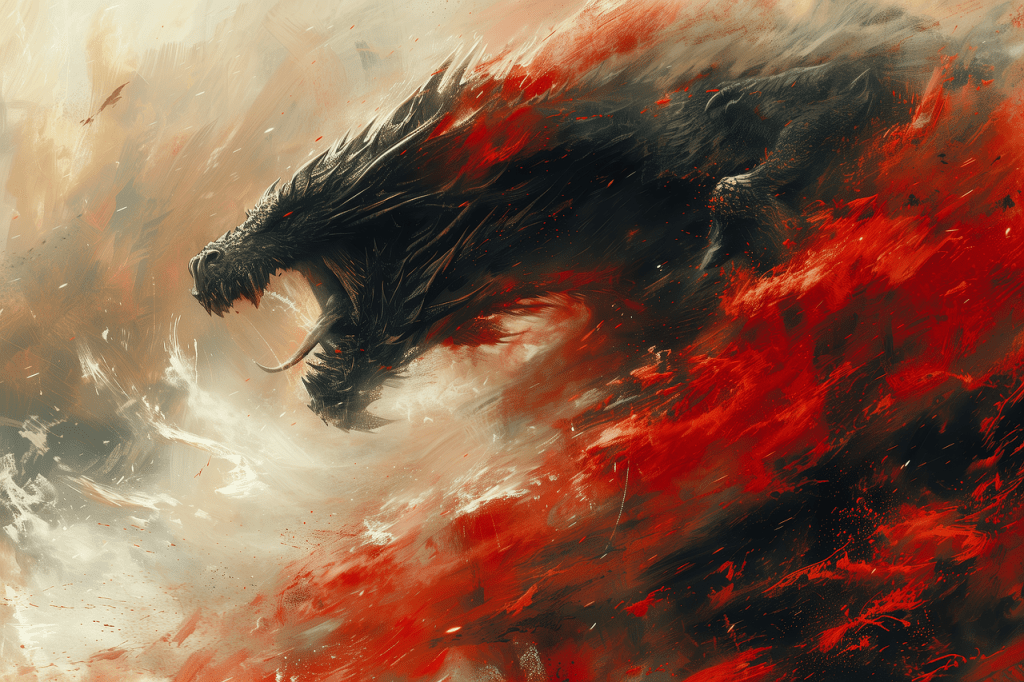
I am the mighty Dragon waiting in the wind.
I am the twisting fire, ready to begin.
I am the rage of light, that shines within the eyes
Of those who are bereft and see through all the lies.
I am the rising heat, swelling beneath the earth.
The mounting indignation against disregarded worth.
I am the trembling dark, terror of the night.
The creeping realisation of crushing fist of might.
I simply wait the day, when I become the we.
When the shackles burst and fury is set free.
When I am we, remember this
I am coming for you.
By Scott Bailey © 2026
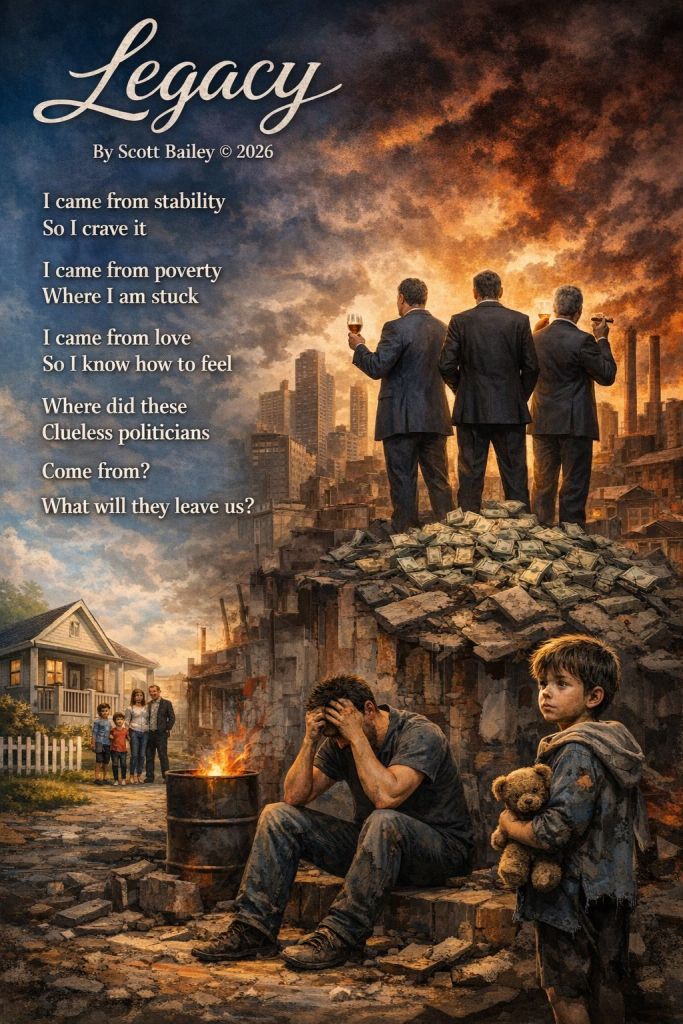
I came from stability
So I crave it
I came from poverty
Where I am stuck
I came from love
So I know how to feel
Where did these
Clueless politicians
Come from?
What will they leave us?
In response to malformed_poetry’s prompt
https://www.threads.com/@malformed_poetry/post/DUDxhMlCIyP?xmt=AQF0AsMPUEp-I94lTywrz95lFEl5XjRM8FlAu6yvbg-ona6j45UhwmKD2ZVrrQRCi_94PbaN&slof=1
 Scott Andrew Bailey - Author