By Scott Bailey © 2026
Scroll
Rage
Scroll
Learn
Apply
Learn
Work
Bills
Work
Pills
Meals
Pills
Stress
Distraction
Stress
No rest
No rest
No rest
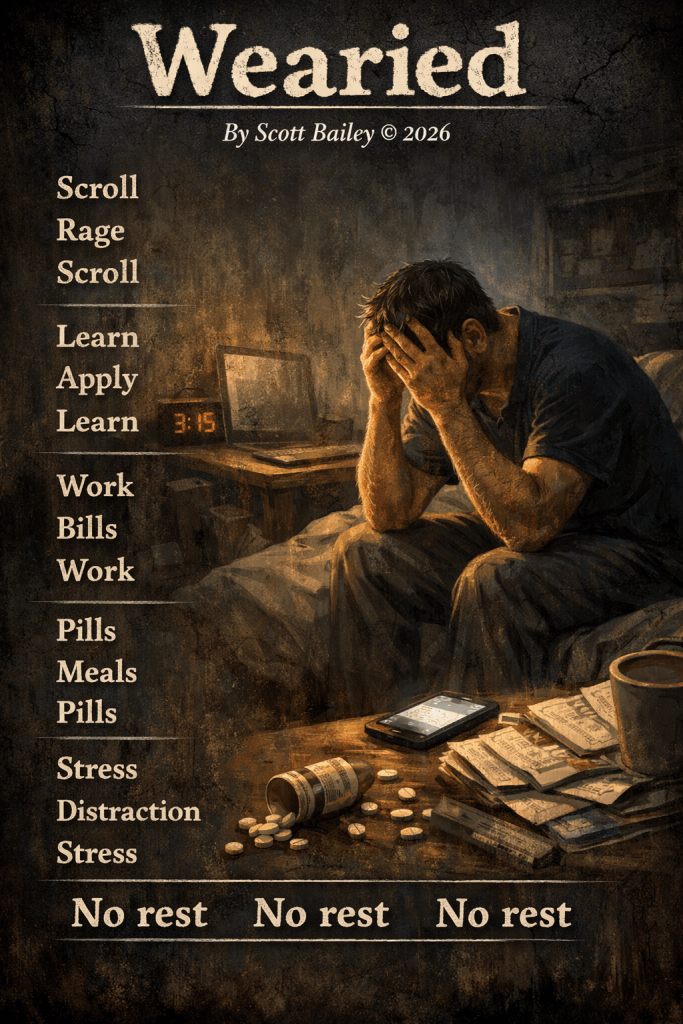
By Scott Bailey © 2026
Scroll
Rage
Scroll
Learn
Apply
Learn
Work
Bills
Work
Pills
Meals
Pills
Stress
Distraction
Stress
No rest
No rest
No rest
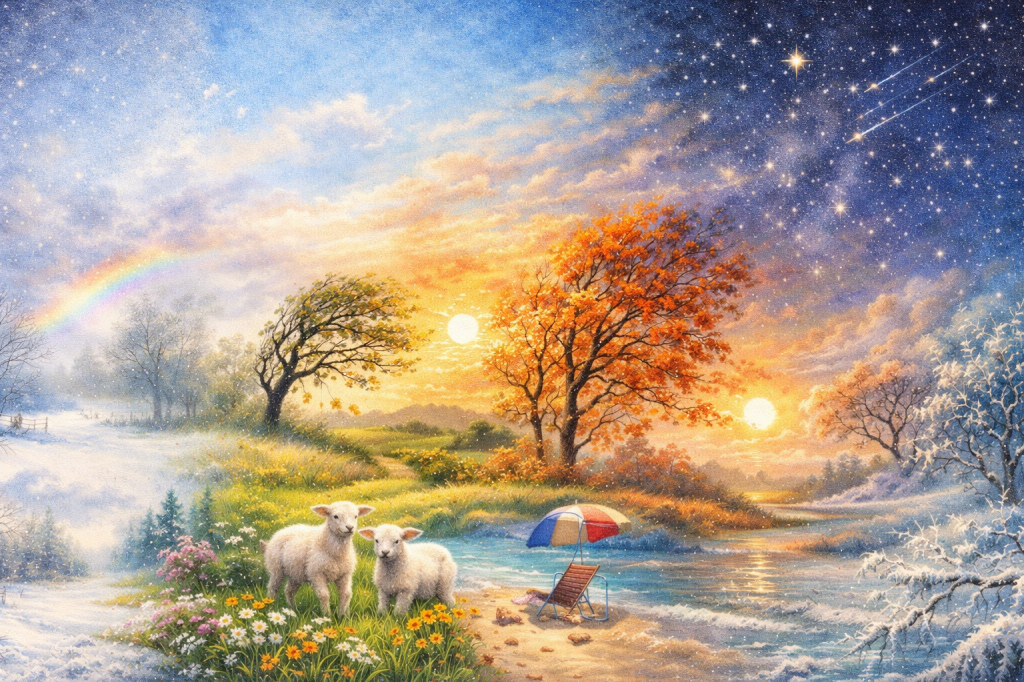
By Scott Bailey © 2026
January snows
White like paper, waiting for words
February mists
Obscuring and caressing the land
March winds
Tumble everything we know
April showers
Freshens the world
May lambs
Bring hope and joy
June beaches
Excite and entice
July sun
Bathes us
August skies
Clear the way forward
September breezes
Tousle the hair of the earth
October leaves
Red like tired eyes
November nights
Reveal the shining stars
December frosts
Freeze time and life
In response to malformed_poetry’s prompt
https://www.threads.com/@malformed_poetry/post/DT5etEACF3A?xmt=AQF0vwCvxZmW4CGkcff7p8_RuHMNY_oRE0BHZ83QEiLa7LUZo1TvSdA19IUKlCIEimas2kw&slof=1
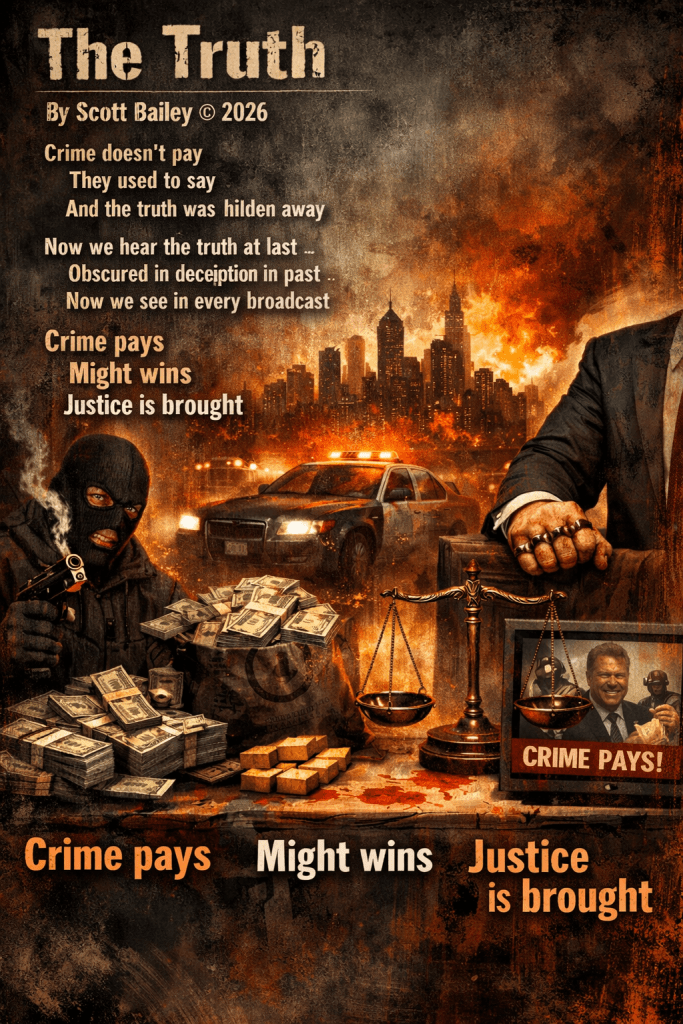
By Scott Bailey © 2026
Crime doesn’t pay
They used to say
And the truth was hidden away
Now we hear the truth at last
Obscured in deception in past
Now we see in every broadcast
Crime pays
Might wins
Justice is brought
In response to malformed_poetry’s prompt
https://www.threads.com/@malformed_poetry/post/DT247CpE_Yr?xmt=AQF0txgXTqcP96e7DghQ6iGreV7nbzcB2HXPrADbgoqiHW4F02QbOyOeIb1RBgzTzsvSFW4&slof=1
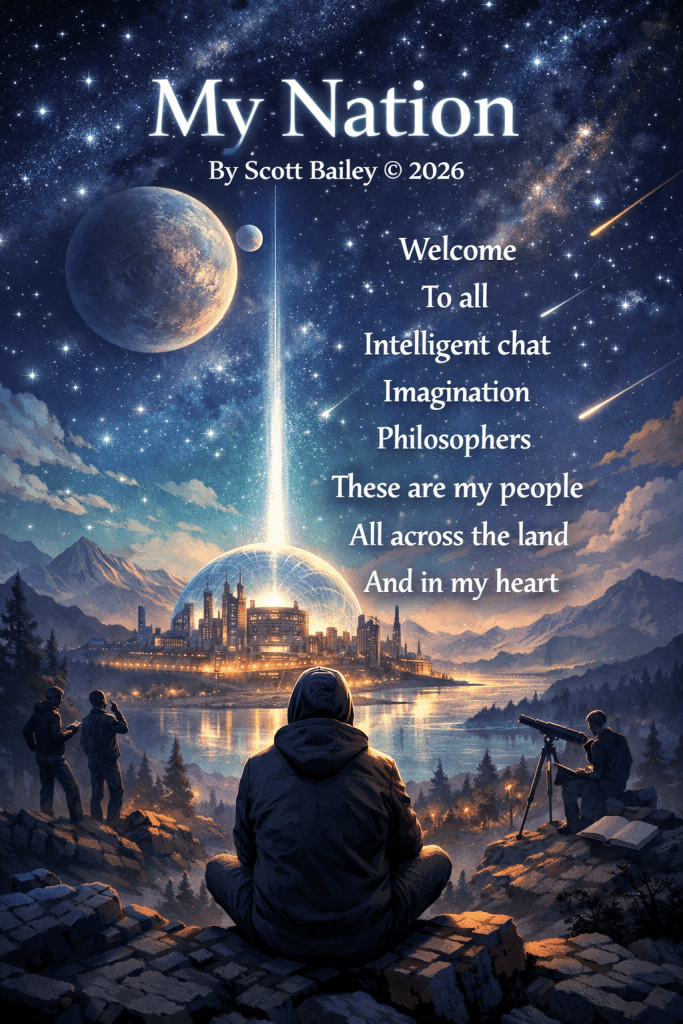
By Scott Bailey © 2026
Welcome
To all
Intelligent chat
Imagination
Philosophers
These are my people
All across the land
And in my heart
In response to malformed_poetry’s prompt
By Scott Bailey © 2026
Flipping through faces
Up for adoption
Trying to choose
How have we come to this?
That there’s so much choice
And how can they smile?
Through their trauma

In response to malformed_poetry’s prompt
By Scott Bailey © 2026
Loyalty when viewed
Within the circle seems sane
From without, madness
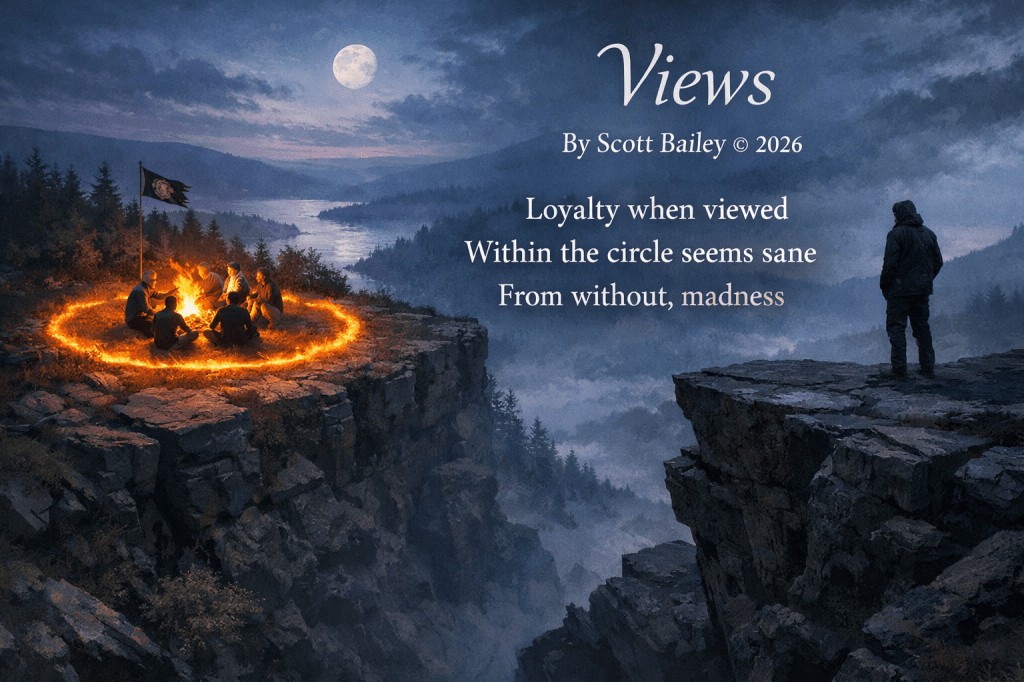
In response to malformed_poetry’s prompt
https://www.threads.com/@malformed_poetry/post/DTvKjIJkVTn?xmt=AQF0HVVYgB82VQcmPIxwgn6aSI4s6eajZKxDYAYW0S3pp528AISiVyKLj3wv9QtpTJFRxxjq&slof=1
By Scott Bailey © 2026
Peace and quiet
And security
Family provided for
No demands
Whisky and a good book
A simple dream
Yet so far distant
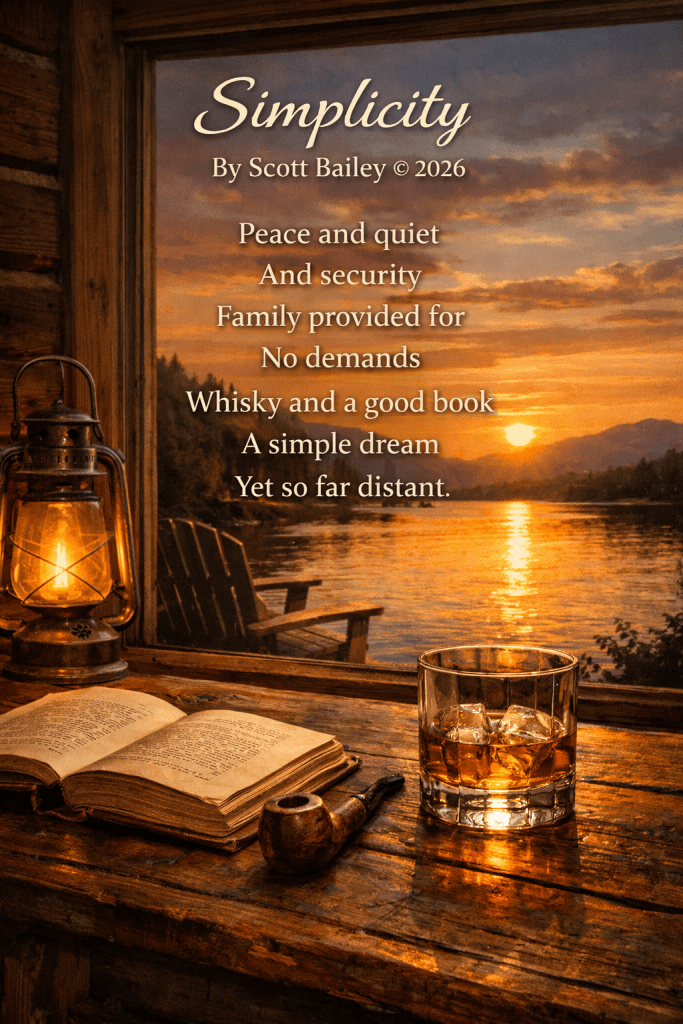
In response to malformed_poetry’s prompt
https://www.threads.com/@malformed_poetry/post/DTsmJw5Dmgq?xmt=AQF0P7fSOmFmNtMVNlbxfuLVfRx4BvIVyOWfTiyuRX7qgBSYMQK52W1t98AbOiSGO6sJetIU&slof=1
By Scott Bailey © 2026
Death of a dream
Is tragic for a single soul
For a nation
Desolation
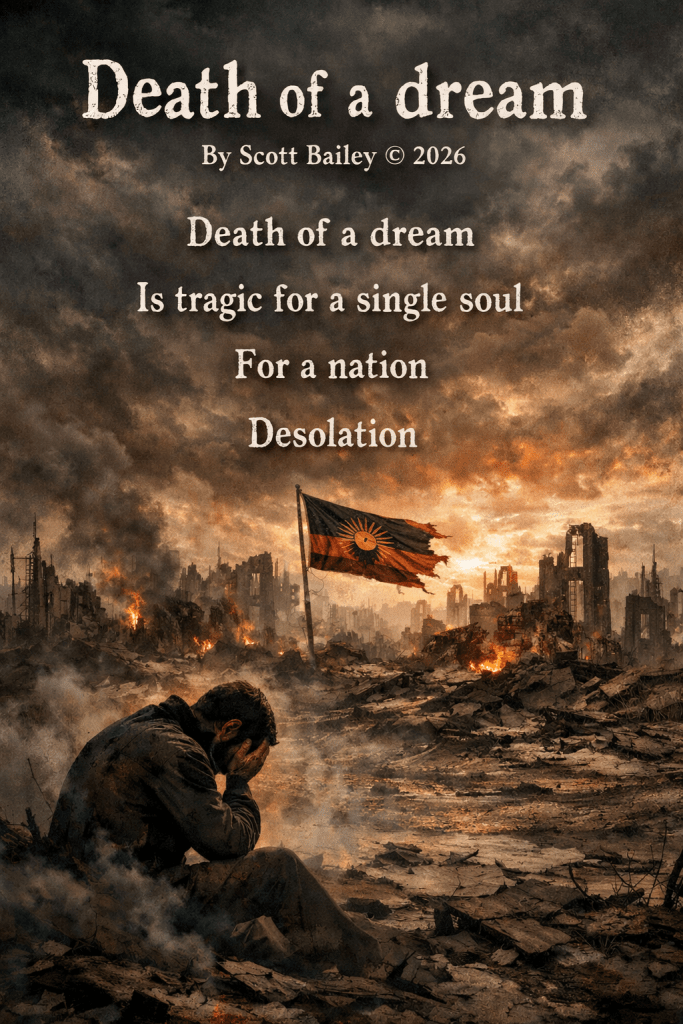
In response to malformed_poetry’s prompt
https://www.threads.com/@malformed_poetry/post/DTqD3NXDO8r?xmt=AQF0ciePxLrPdGHP6DGMCxy2nTwKswIsc1XhlT-K6Nli7BRkRRPauX4qhMZCJDF9PcPsYoZ0&slof=1
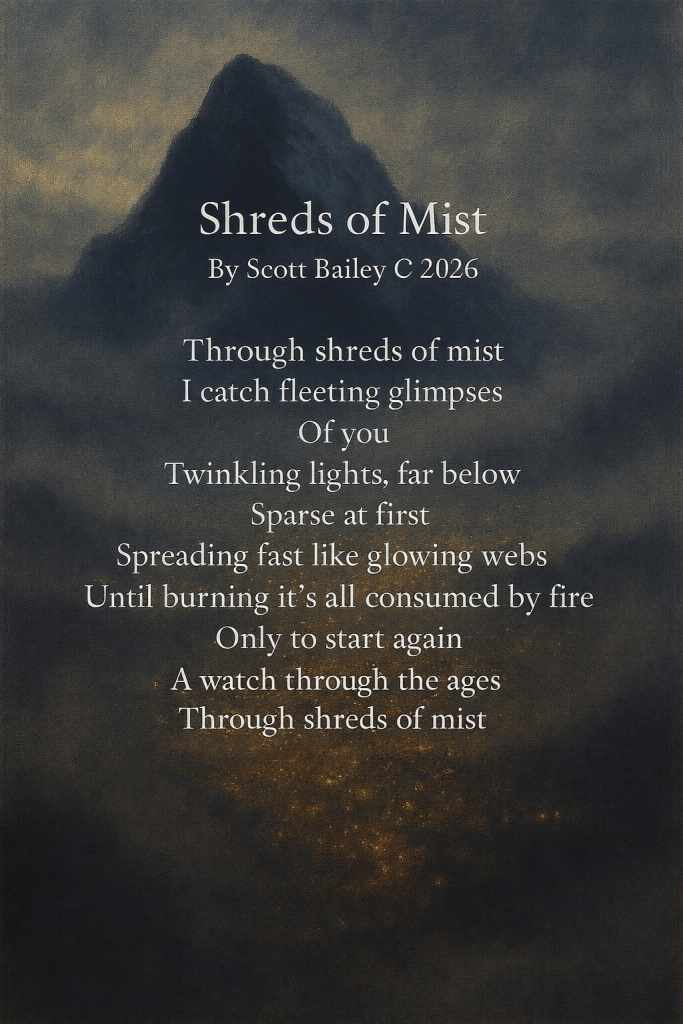
By Scott Bailey © 2026
Through shreds of mist
I catch fleeting glimpses
Of you
Twinkling lights, far below
Sparse at first
Spreading fast like glowing webs
Until burning it’s all consumed by fire
Only to start again
I sigh
A watch through the ages
Through shreds of mist
In response to malformed_poetry’s prompt
https://www.threads.com/@malformed_poetry/post/DTneIB-ipax?xmt=AQF0MWwyjZPQ9YYDPhZBWROktab-aJRQTm5s-C_LWp4OpObpovRwudZ-DZZ3qvpRssTpdCDJ&slof=1
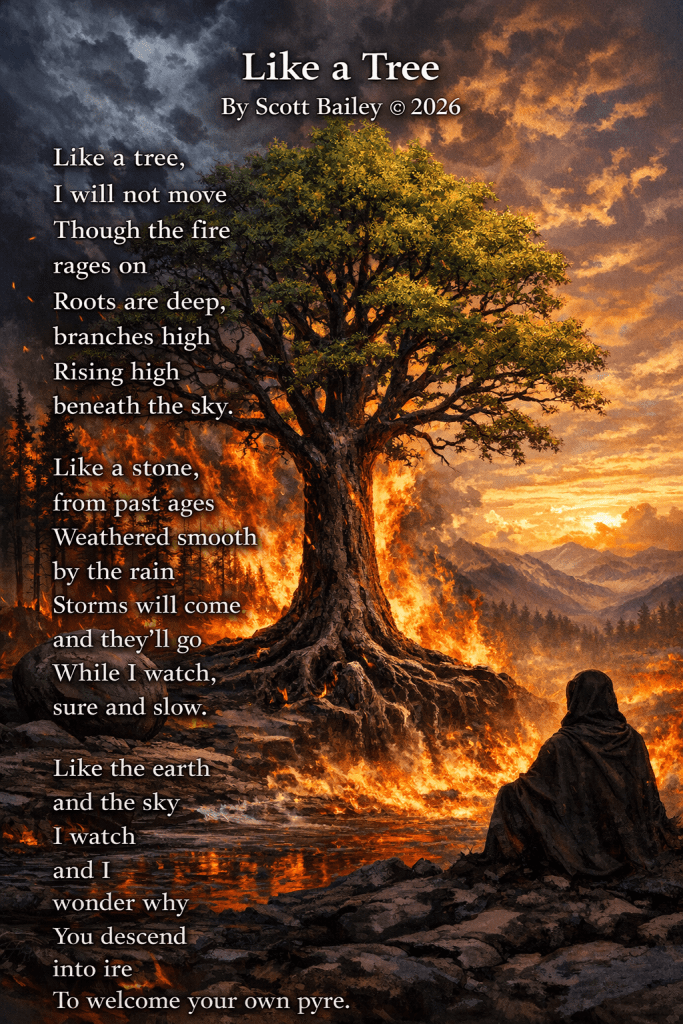
By Scott Bailey © 2026
Like a tree,
I will not move
Though the fire
rages on
Roots are deep,
branches high
Rising high
beneath the sky
Like a stone,
from past ages
Weathered smooth
by the rain
Storms will come
and they’ll go
While I watch,
sure and slow
Like the earth
and the sky
I watch
and I
wonder why
You descend
into ire
To welcome
your own pyre
In response to malformed_poetry’s prompt
https://www.threads.com/@malformed_poetry/post/DTk1DAjEQNh?xmt=AQF0d0AXis9gMGC_TQP9fW9jXMRZCeufWNBLvdaHMcH51zY0xd9KAqdXDjR_XkMARSW4V_g&slof=1
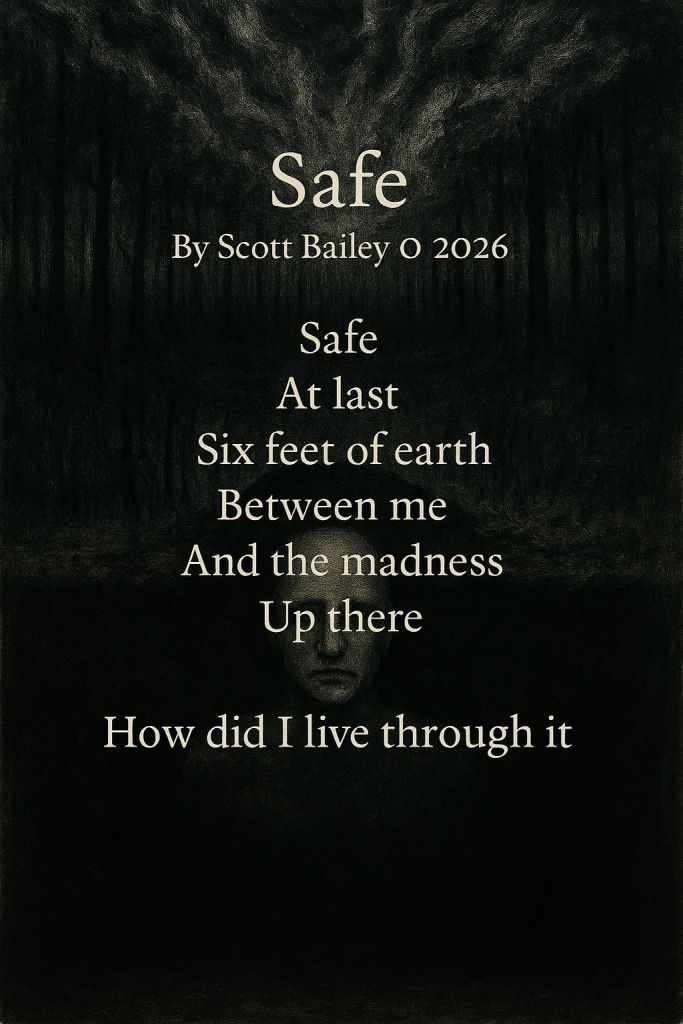
By Scott Bailey © 2026
Safe
At last
Six feet of earth
Between me
And the madness
Up there
How did I live through it
In response to malformed_poetry’s prompt
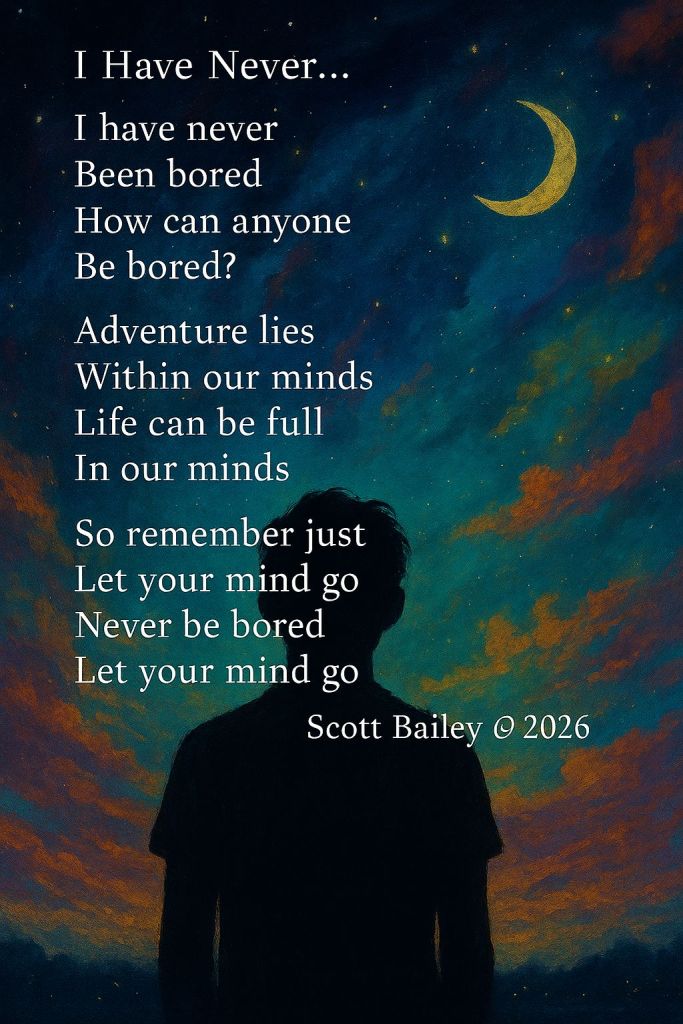
By Scott Bailey © 2026
I have never
Been bored
How can anyone
Be bored?
Adventure lies
Within our minds
Life can be full
In our minds
So remember just
Let your mind go
Never be bored
Let your mind go
In response to malformed_poetry’s prompt
https://www.threads.com/@malformed_poetry/post/DTfzCcDjJtq?xmt=AQF0D4qWCbxXth-TSD3jxVyx0xvhObh3x3NDdCmNFHboPShhVGVHF6WNWMXnu9Y5D6uxxJ7U&slof=1
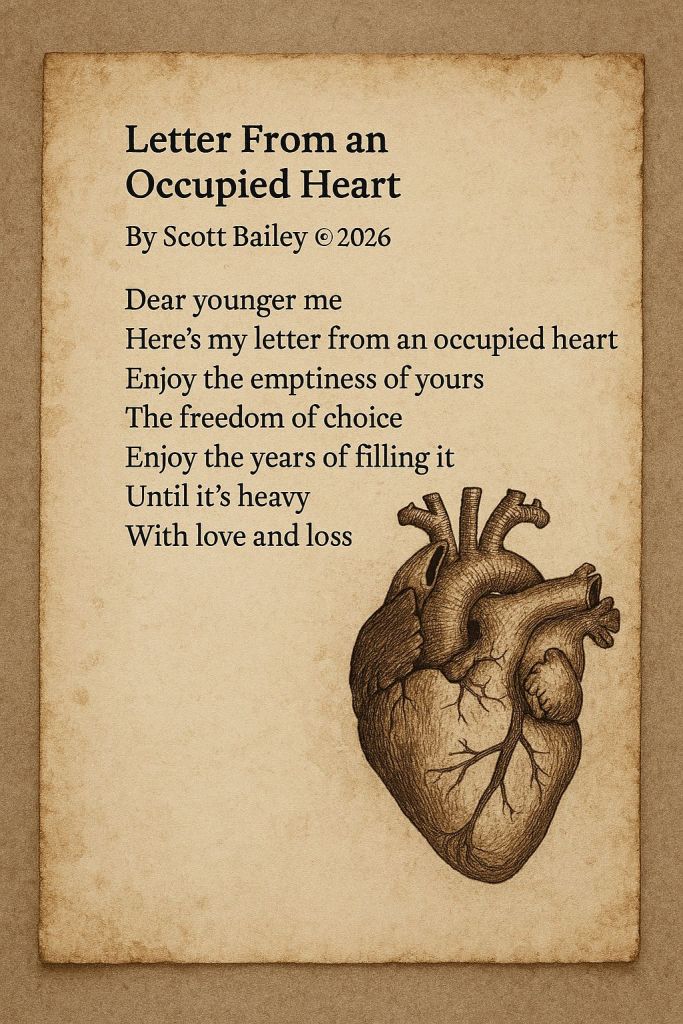
By Scott Bailey © 2026
Dear younger me
Here’s my letter from an occupied heart
Enjoy the emptiness of yours
The freedom of choice
Enjoy the years of filling it
Until it’s heavy
With love and loss
In response to malformed_poetry’s prompt
https://www.threads.com/@malformed_poetry/post/DTdIlpXDN-M?xmt=AQF0DnKUORYuze0KxRsUpYi3rOlP-BfU1r78OyJ-34BIFHu0lGr7sGXLUxSJ3YUhj3MwWX0&slof=1
By Scott Bailey © 2026
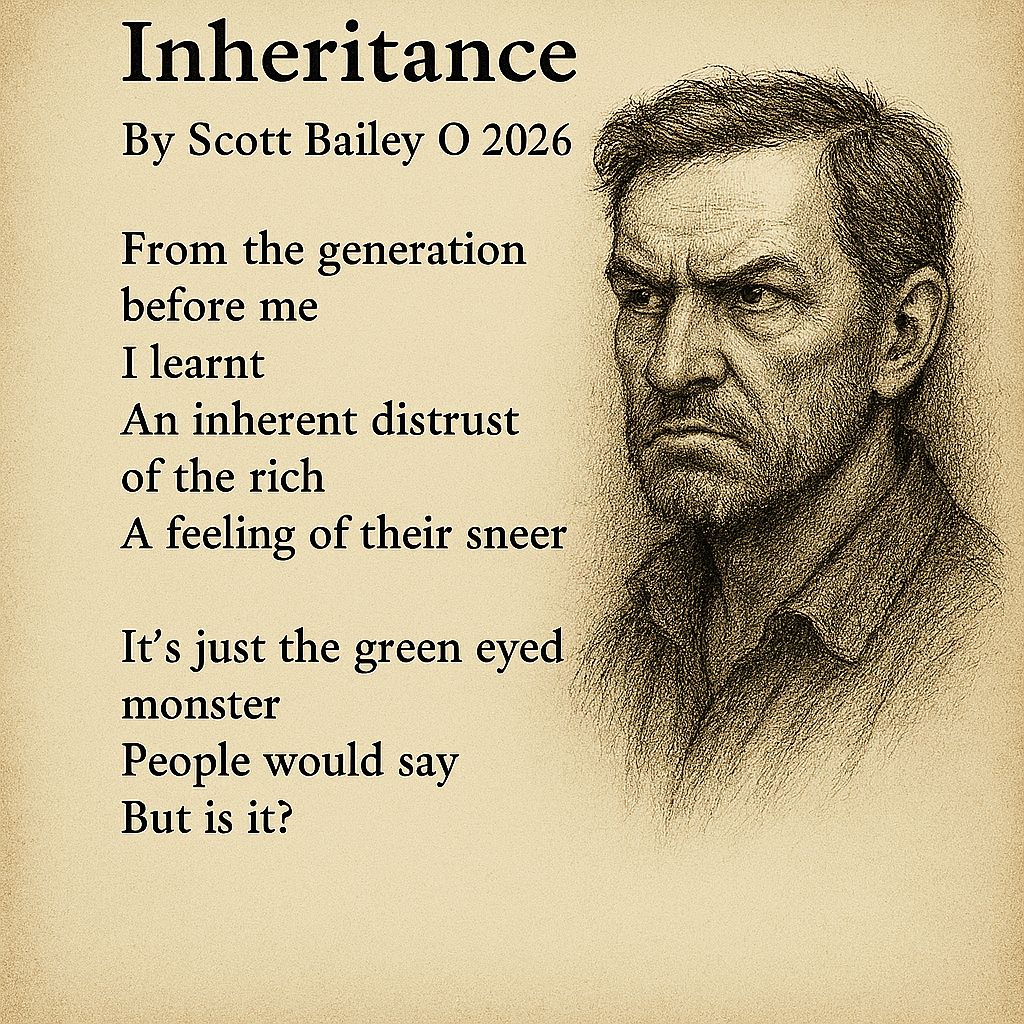
From the generation before me
I learnt
An inherent distrust of the rich
A feeling of their sneer
It’s just the green eyed monster
People would say
But is it?
In response to malformed_poetry’s prompt
https://www.threads.com/@malformed_poetry/post/DTaouDXDDAN?xmt=AQF07iokOK4-S1W_STgLWqwJDnRrEXXSh4by1wvhNsZTwOJtZa94vDaTme5ECvT03V6ax-Oa&slof=1
By Scott Bailey © 2026
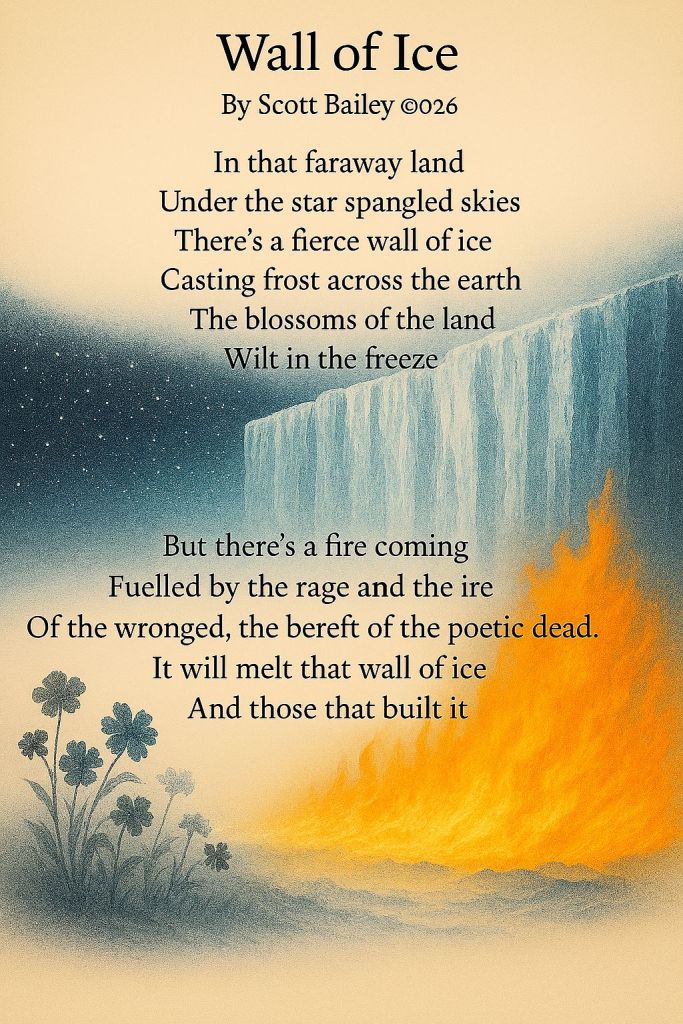
In that faraway land
Under the star spangled skies
There’s a fierce wall of ice
Casting frost across the earth
The blossoms of the land
Wilt in the freeze.
But there’s a fire coming
Fuelled by the rage and the ire
Of the wronged, the bereft of the poetic dead.
It will melt that wall of ice
And those that built it
In response to malformed_poetry’s prompt
https://www.threads.com/@malformed_poetry/post/DTYBL7uDEG5?xmt=AQF0nOC4pfgVtzBS4plAODeEjwS5OSLNTdULWpBxcMcx5qvPk3w3YJmGUE1K3j_sZqsRT4VJ&slof=1
By Scott Bailey © 2026
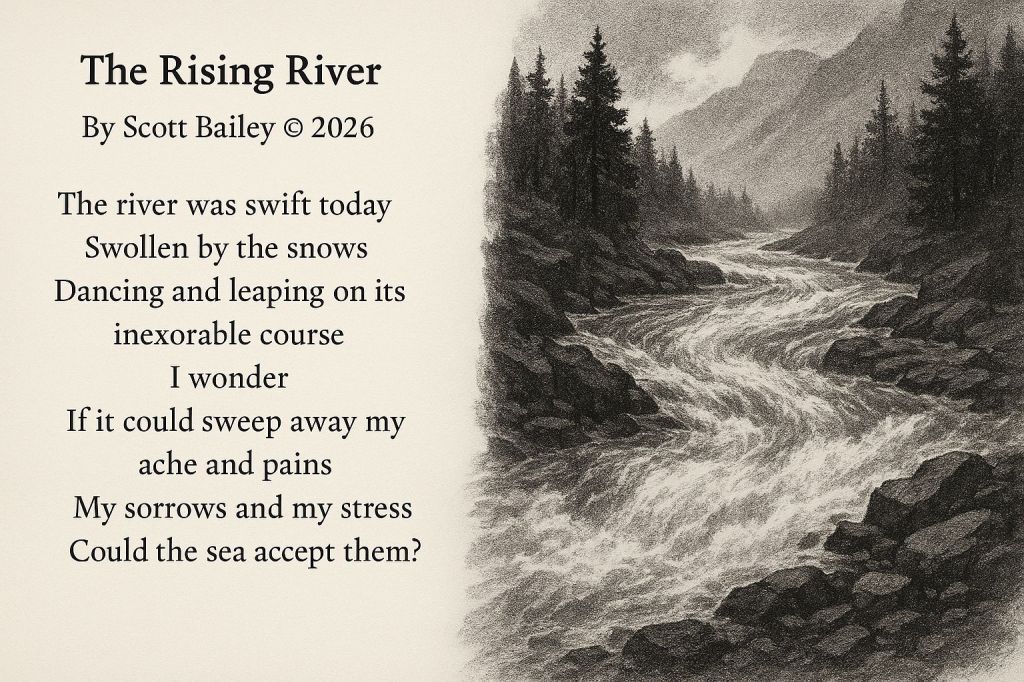
The river was swift today
Swollen by the snows
Dancing and leaping on its inexorable course
I wonder
If it could sweep away my aches and pains
My sorrows and my stress
Could the sea accept them?
In response to malformed_poetry’s prompt
https://www.threads.com/@malformed_poetry/post/DTVZ8MNjIvb?xmt=AQF01KbeEDCHTUus1GL7g7QuD2jxSq2BHeNdAdxpgl58Wp14unFU9sFK3lqVRgiWD6aufk1T&slof=1
By Scott Bailey © 2026
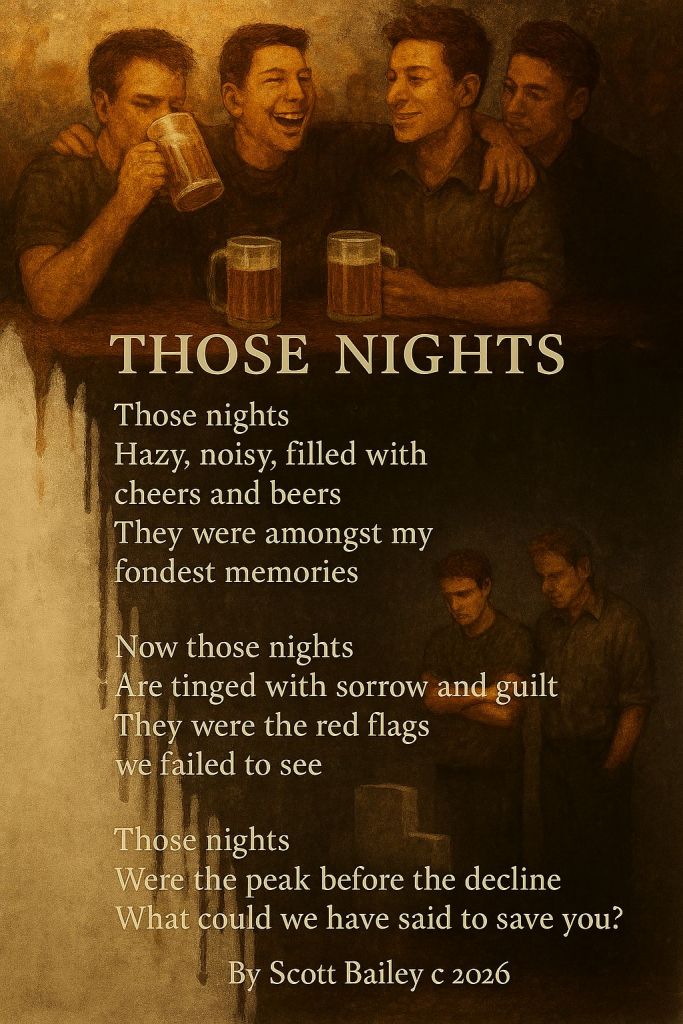
Those nights
Hazy, noisy, filled with cheers and beers
They were amongst my fondest memories
Now those nights
Are tinged with sorrow and guilt
They were the red flags we failed to see
Those nights
Were the peak before the decline
What could we have said to save you?
In response to malformed_poetry’s prompt
https://www.threads.com/@malformed_poetry/post/DTSzXGmAnOe?xmt=AQF0kn4EzqdMFFhP0F4HBdFsZjtnz8RXes_0HFEfF4HYZ4BwL73g6stC9737y1yuwlApCSA&slof=1
By Scott Bailey © 2026
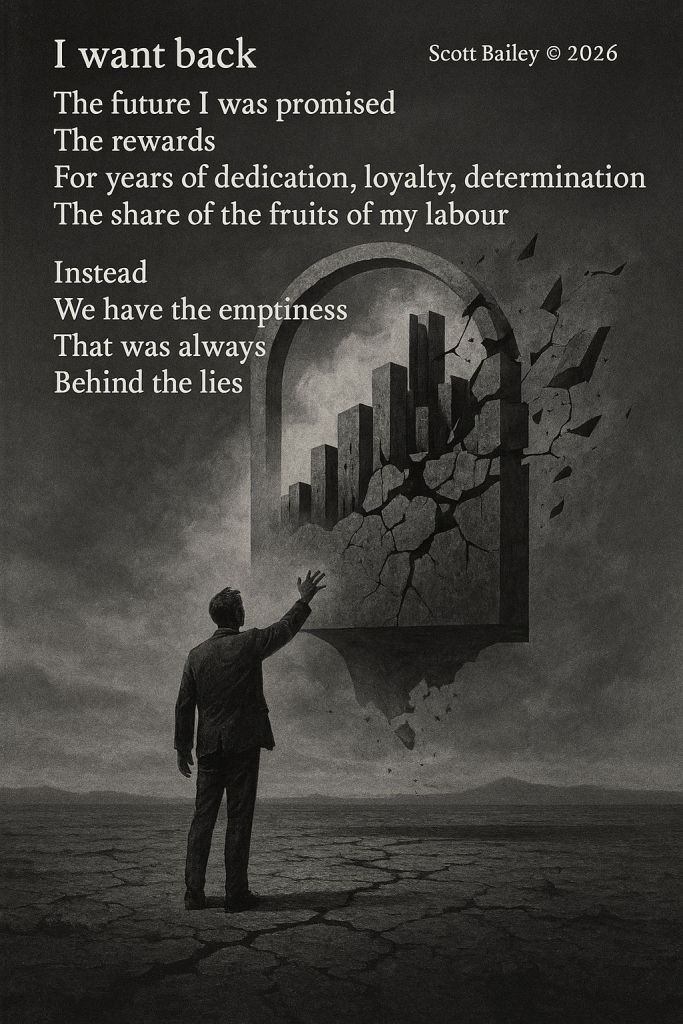
I want back
The future I was promised
The rewards
For years of dedication, loyalty, determination
The share of the fruits of my labour
Instead
We have the emptiness
That was always
Behind the lies
In response to malformed_poetry’s prompt
https://www.threads.com/@malformed_poetry/post/DTQNfWHgqCW?xmt=AQF0AVJbQkkLzqJyO8c77M7OauJEjiSFMDR4GsroOerTYKbTxvQ1J1_YihrMxTk9H91UUYKe&slof=1
By Scott Bailey © 2026
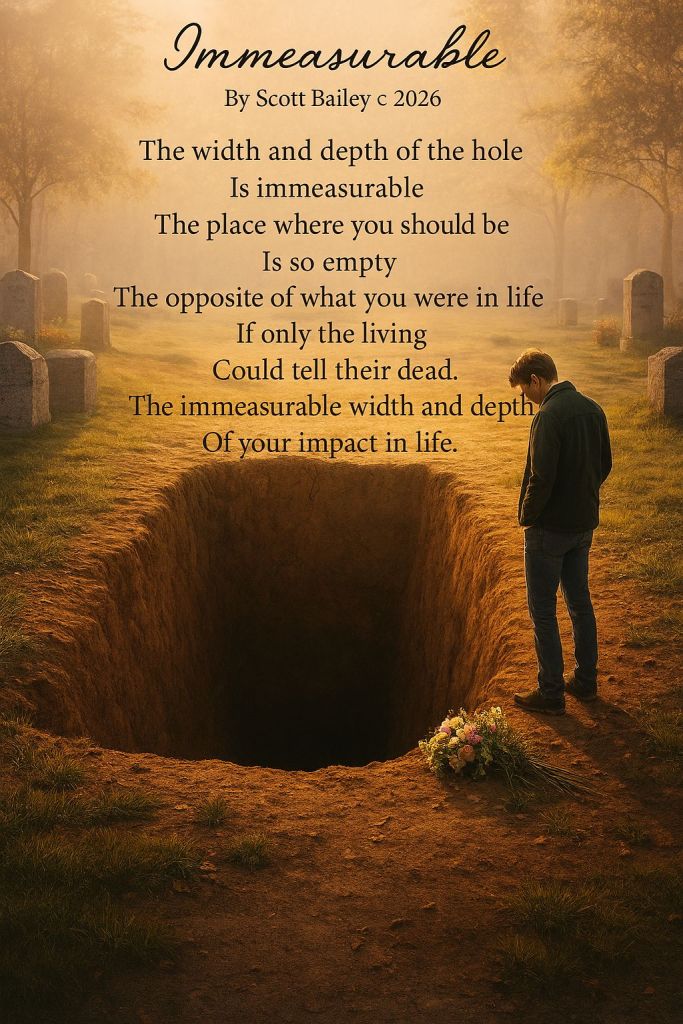
The width and depth of the hole
Is immeasurable
The place where you should be
Is so empty
The opposite of what you were in life
If only the living
Could tell their dead
The immeasurable width and depth
Of your impact in life
In response to malformed_poetry’s prompt
By Scott Bailey © 2026
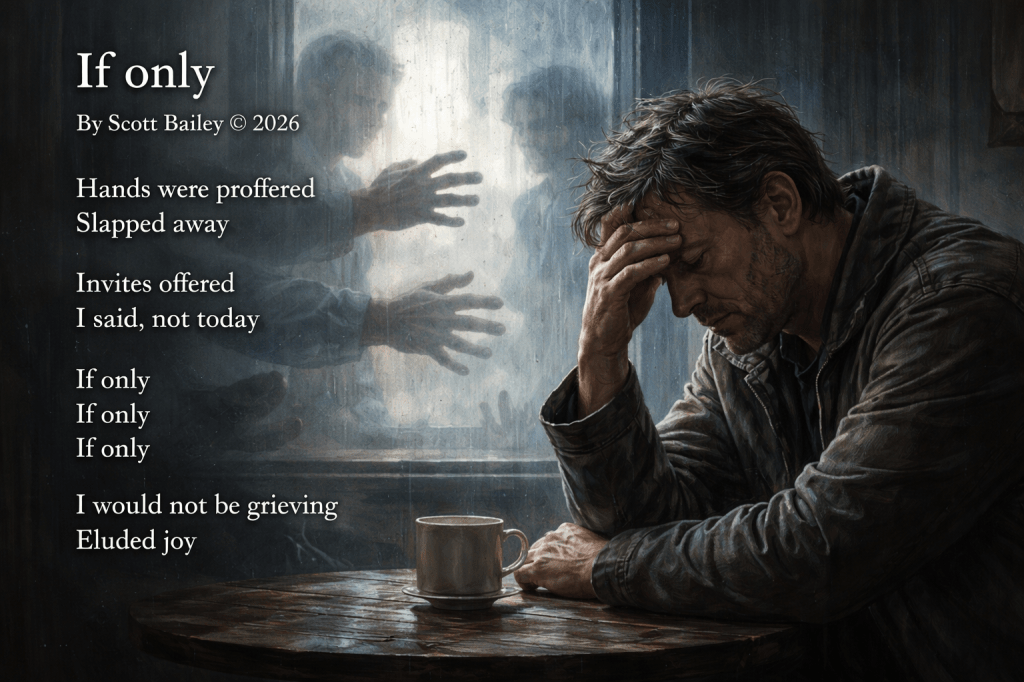
Hands were proffered
Slapped away
Invites offered
I said, not today
If only
If only
If only
I would not be grieving
Eluded joy
In response to malformed_poetry’s prompt
https://www.threads.com/@malformed_poetry/post/DTLC85djCRF?xmt=AQF0uoQKfXRNFAMGGG4K2zGIsJlHtlHGB1rSJCqw16opDUYRbif9LA-xASAcDq_A6tuz-48&slof=1
By Scott Bailey © 2026
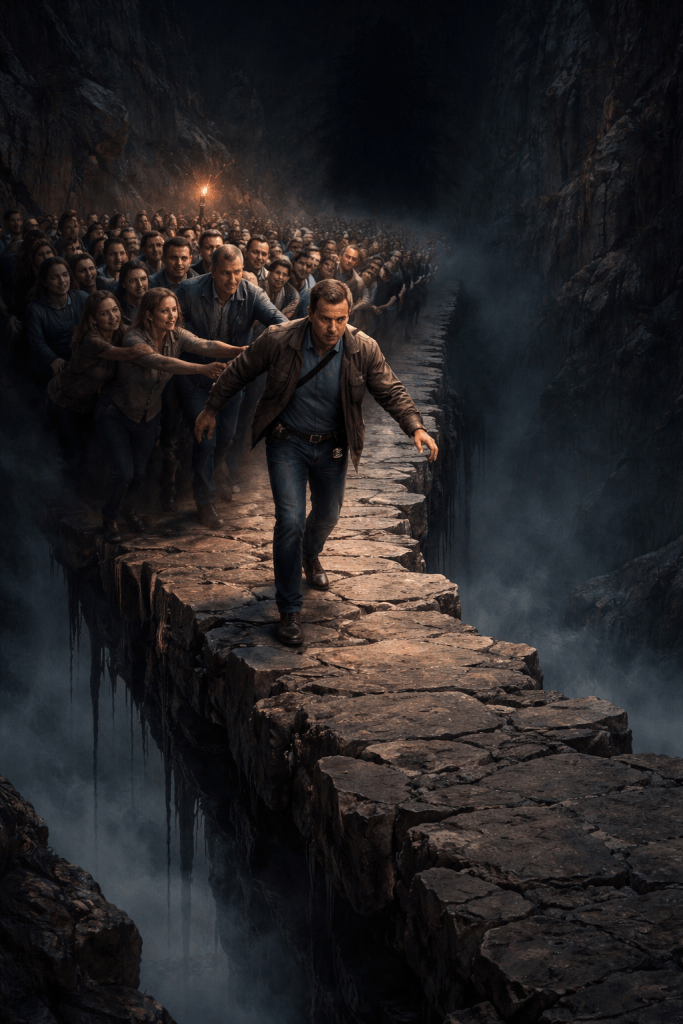
Step by step
Trembling, shuffling
Step by step
On the narrow span of stone
Stretching off into darkness
Unknown length
Vertigo threatening
Trembling, shuffling
Step by step
Pressed forward
By the weight of the crowd behind
Who need you
To continue
Step by step
Trembling, shuffling
Not courage
Not duty
Just the weight of need
Of the others
In response to malformed_poetry’s prompt
https://www.threads.com/@malformed_poetry/post/DTIfNARjrqN?xmt=AQF00EwUoDRZLgvJfRRUMgEpyIo4jjUpkaSiZN2_r39zpmEwXg4NXYUti925aq459pARpFm_&slof=1
By Scott Bailey © 2026
An empty affair
And it meant nothing I swear
The heart stays broken
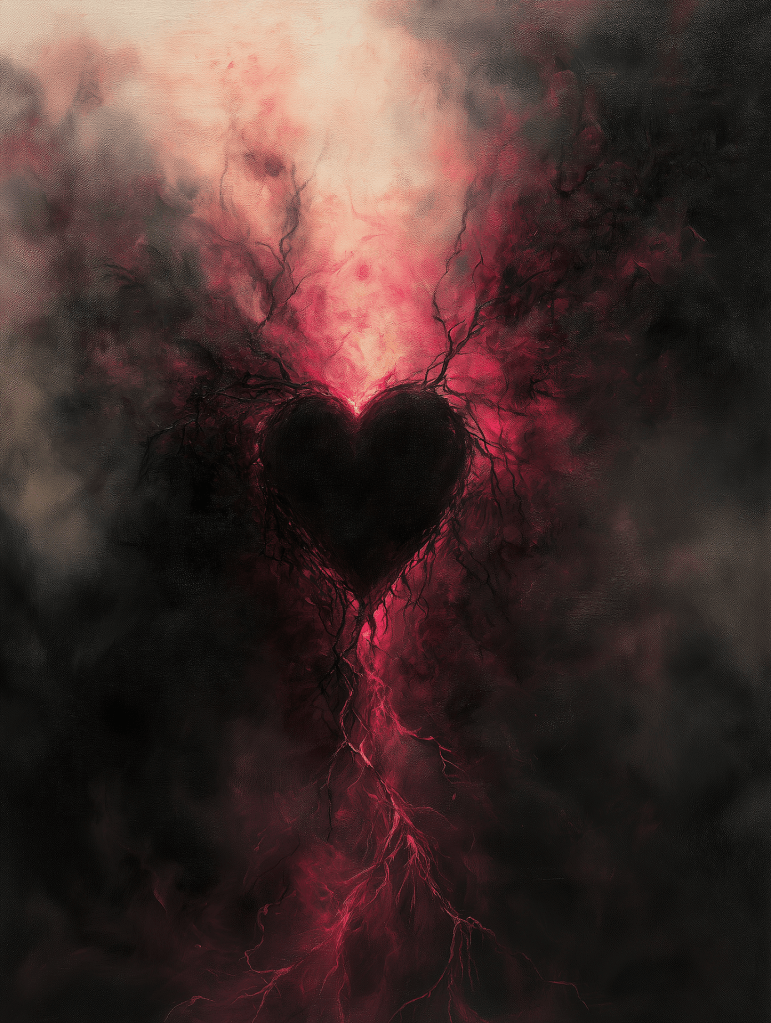
In response to malformed_poetry’s pompt
By Scott Bailey © 2026
I’ve been trying all my life to understand,
What I am
What I should be.
Now I wonder, should I have?
Or should I just have been?

In response to malformed_poetry’s prompt.
By Scott Bailey © 2026
An elephant.
Rendered by time and water
And wanting minds
Myths and legends might arise
Tales of the transformation from flesh to stone
Of the final, enduring, beast
Long after the last real elephant
Has been forgotten
In response to: https://www.threads.com/@malformed_poetry/post/DTAx0UQDCgS?xmt=AQF0FyV3mRIiPxTaOZonNRwewCckhS8cfH468GY1w2E8hfAIJyv4084_D40x8iX14N_zmRQ&slof=1
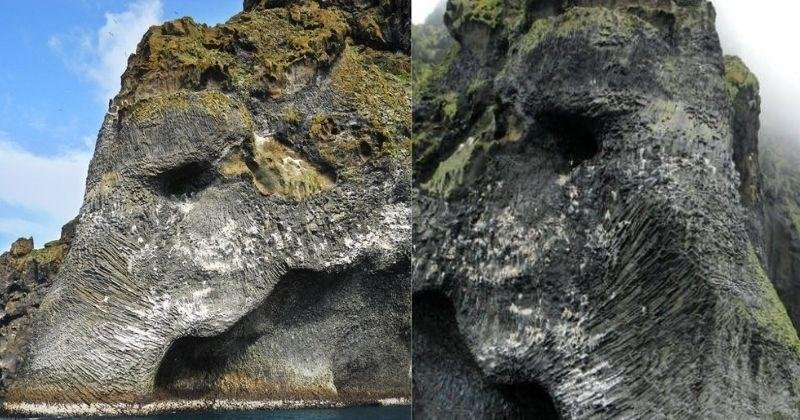
So, I am undertaking another poetry challenge by trying to respond to the daily prompt by malformed_poetry on threads (check them out!). I will reply their on the thread but will post here too.
I may or may not succeed, I am putting no pressure on myself. Just trying to get the juice flowing again.
By Scott Bailey © 2026
Those who see
Are frozen with fear
Drowning in syrup
As the future approaches
Wondering what can we do.
What can we do?

Slowly the shadows pass
As memories retreat and fade
Passing beyond the glass
Like springtime budding grass
New joys together are made
Slowly the shadows pass
This pain we will surpass
And sunbeams will cascade
Passing beyond the glass
Though sometimes the shattered glass
Will cut us like a blade
Slowly the shadows pass
New light will surely trespass
On the lawn that we have made
Passing beyond the glass
Those memories we can’t bypass
But their colour has finally greyed
Slowly the shadows pass
Passing beyond the glass
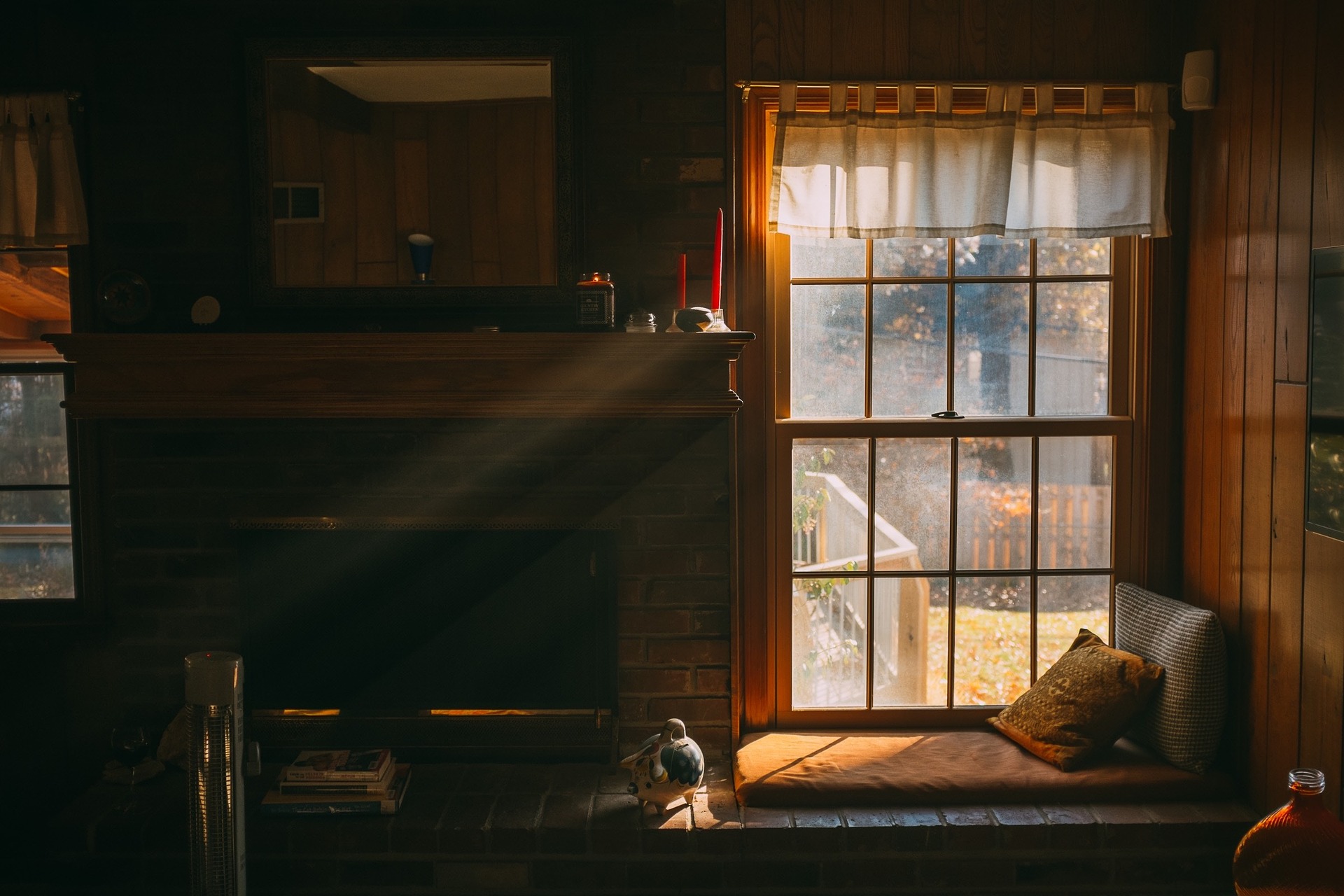
Originally published in A Spring of Dreams

The man in the tree
The plank
The turned leg
The joint
The dust and the shavings.
The tree in the man
The setting down of deep roots
The reaching for the skies
The drinking deep of the earth
The steadfastness and the wielding.
Dusty grey spider
Runs amidst the brush
The twigs and broken leaves
Casting coverlet of silk
Over winters decay
Busy, light, unnoticed
Predator
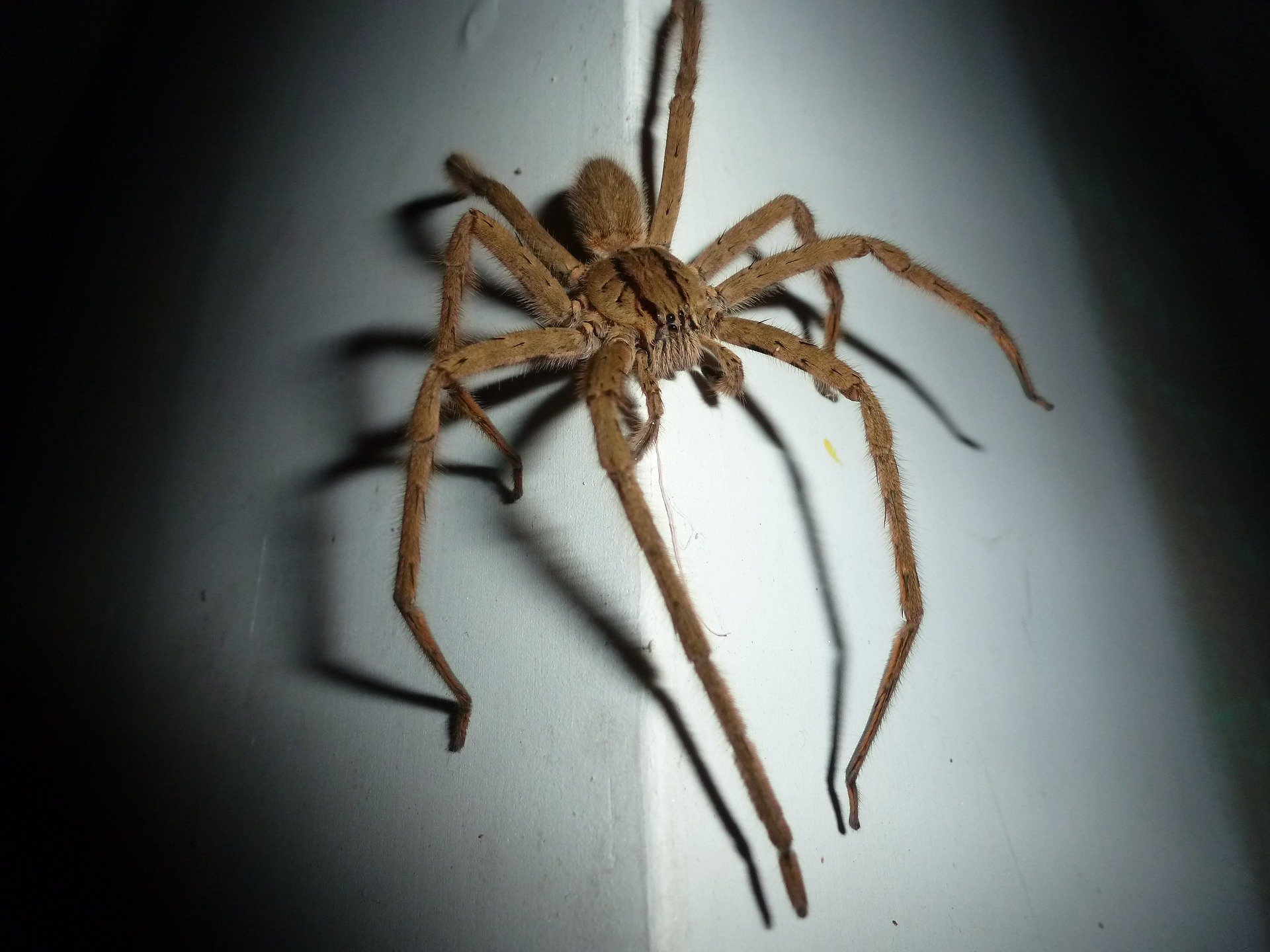
Originally published in A Spring of Dreams
Where the crashing sea
Meets the shifting cracking ice
Hunters hunker down

Two trees
Old as memory
Some leaves fallen
A root cut off
Two trees
Explored
Examined
Noted down.
Two trees drawn together
Forever entwined.

A conduit, a bridge or a gateway.
It goes under many old names.
Open it with wonder and reverence,
For the spell will then be underway.
The weakest of hands can undo it
The portal of magical ways
Connecting one mind to another
With a delicate ethereal wave.
Some portals are heavy and dusty
Some dance with electrical sparks
But they all do the same, all show the way
For strange dreams from heart to heart.
There were even once living gateways
Who opened the way with a look
Always there’s one right beside us
The conduit, the gateway, the book.

Originally published in A Spring of Dreams
Green fingers
Rip open the rusty shell
Slow tendrils with irresistible grasp.
Dealt with by a blade or a chemical wash
They will be back.
In time, victory will be theirs.

I am the factory wall, despised and so defaced
Covered with graffiti, defiled and disgraced.
I am the concrete tower that holds up the concrete road
Bleak and faceless white, bearing my toxic load.
I am the bin on the street, bursting full with waste
Where rats and vermin crawl, around me in distaste.
I am the battered traffic cone abandoned in the hedge
A used forgotten prize of lives lived on the edge.
I am the street side gutter where dirty water flows
A place of infestation, where all the darkness goes.
I am the discarded knife with bloodstains on the blade
The close but unseen menace lurking in the shade.
I am the lofty tower spewing clouds into the air
That speed across the oceans, killing without a care.
I am the broken shelf with screws rent from the wall
That supported all the books and caused them all to fall.
I am the sodden cardboard box flapping in the street
Broken, limp, forgotten, always under feet.
Once I was a poet, bright-browed with golden-haired
Playing harp and singing, songs into the air.
Once I was a druid learning from the trees
Drawing strength from bark and wisdom from the leaves.
Once I was a warrior with proud and shining sword
Singing with my war-band a deep heroic chord.
Once I was a chieftain with princes round my hearth
Against war and cold and famine, our mighty hearts did laugh.
Once I was a king whose soul was all the land
Who tended all his people with a strong and generous hand.
But I made other people suffer
Now suffer myself in turn.
But as you wreak your vengeance
What lesson do you learn?
What lessons do you all forget?

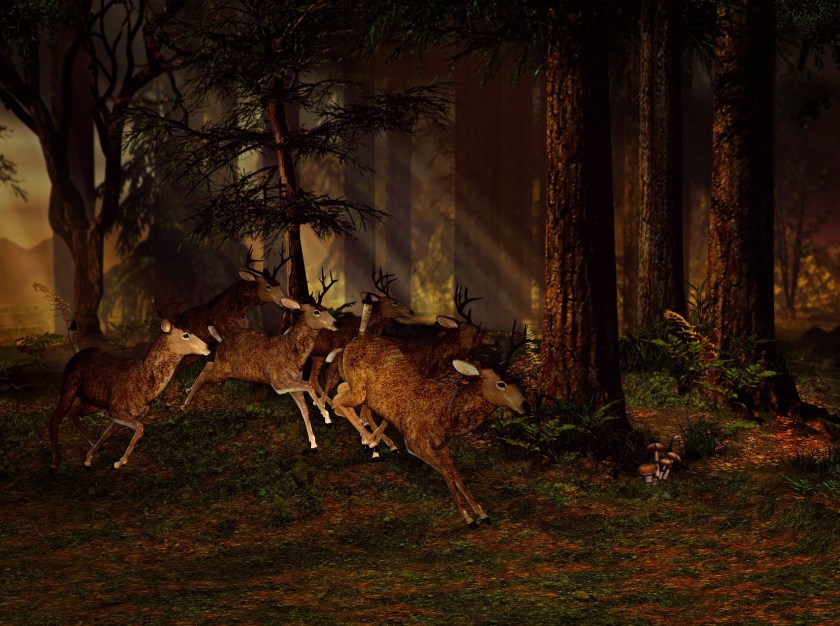
Slowly shifting canopy
Layer on layer soft light green
Waving like courtesan fans.
Sun winking through.
Seedlings drifting down sunbeams
Dappled brown leafy ground.
Scent of earth.
Rough feel of bark.
Through this, I run!
And the forest’s essence
enters my senses
vitalises my blood!
The awkward stance
Where does it stem from
A lifetime of toil?
Injury?
Or the weight
Of the world?
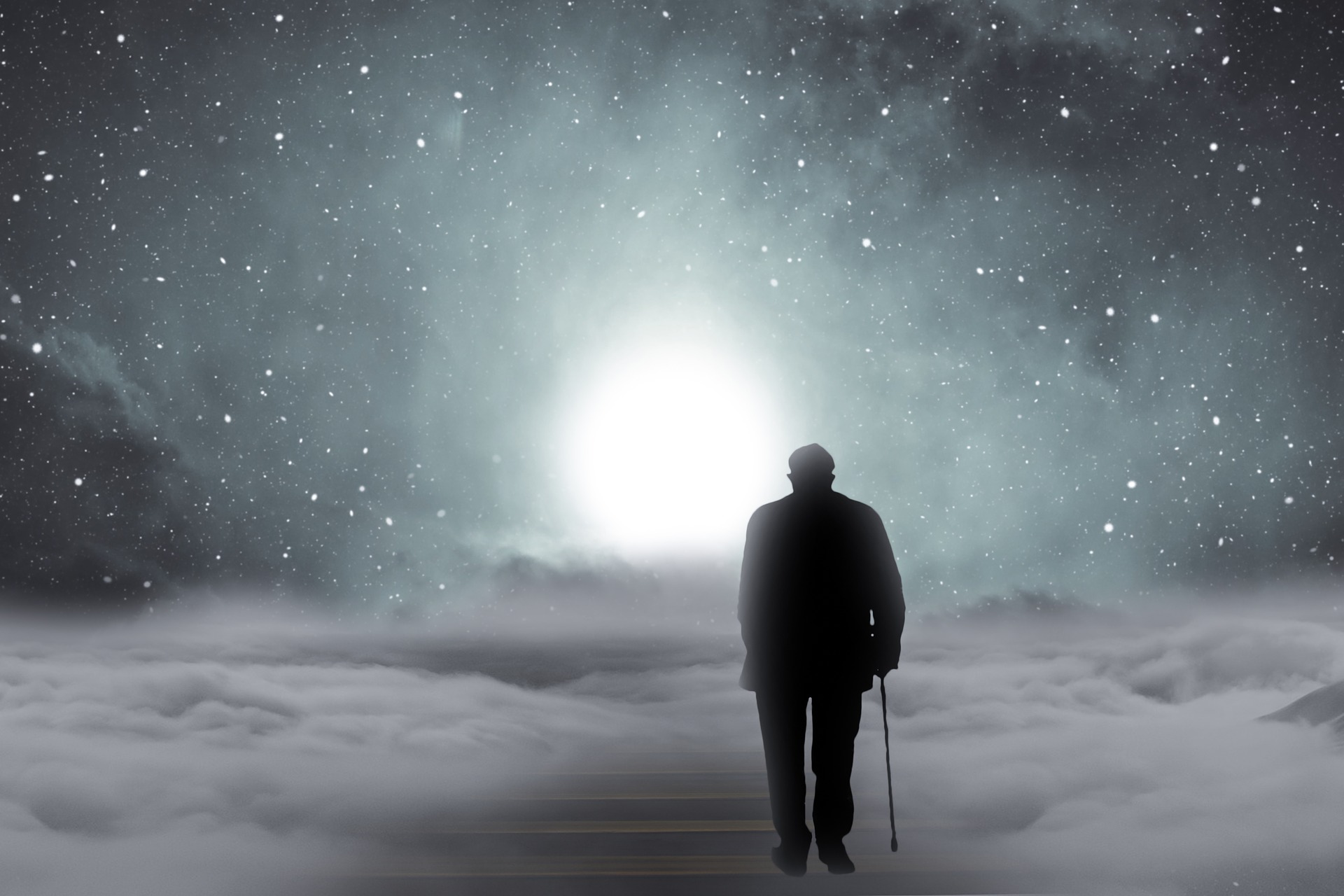
In response to the daily prompt Awkward
#DailyPrompt, #amwriting, #postaday
Feign ambition
Feign happiness
Feign expertise
Until the day
It all comes true
Until one day
The realisation
That day
Will never come

In response to my daily prompt Feign
A tenuous link today but hey!
#DailyPrompt, #amwriting, #postaday
Deserts
Dust and heat
That will be the crop
Of the greed
Of our age
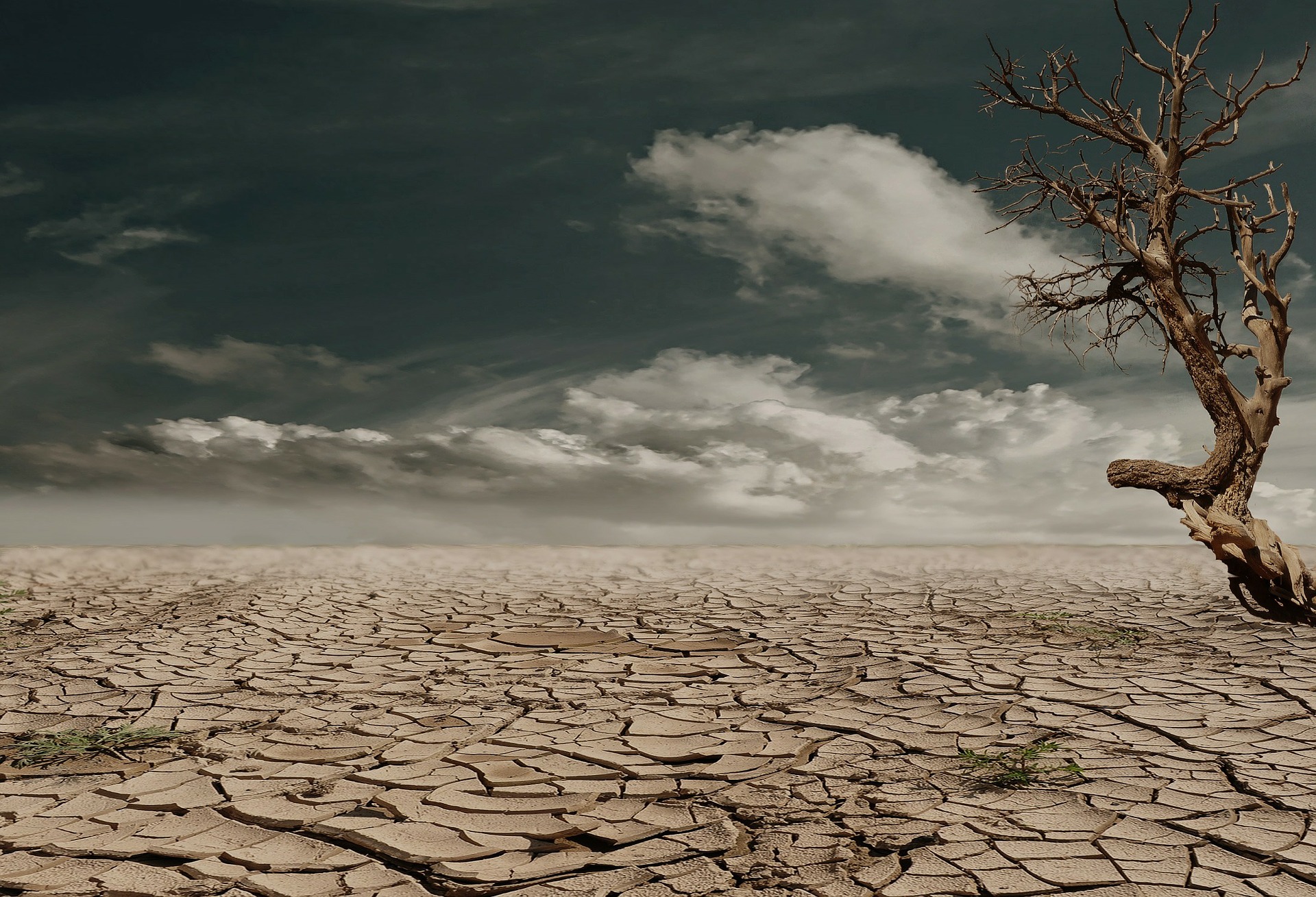
In response to my daily prompt Crop
#DailyPrompt, #amwriting, #postaday
Acute pain
A cute name
For agony
Thus
Language
Is turned against us

In response to my daily prompt Acute
#DailyPrompt, #amwriting, #postaday
We can make you a better parent
Just come and bank with us
We can make you a better lover
Just use our scent
We can make you more successful
Just drive our cars
We can make you a better man
Just drink our beers
We can make you young and cool
Just use our phones
We can make you healthier
Just eat our food
Give us your money
So we can fill the gaps
Of your so obviously
Empty lives

Originally published in A Spring of Dreams
Gone
The sound
The thunder
No silence reigns
And the poppies bloom
Nodding respectfully
To the brave that lay beneath
The swathe of red that remembers
The blood that was shed here for freedom
And the folly of man to his brother
So we may never forget all that pain
To ensure it will not come again
We respect them with silent thoughts
Resist any violent trends
Talk, build bridges, not walls
While the poppies bloom
While silence reigns
Honour those
That are
Gone

In response to COLLEEN’S WEEKLY #TANKA TUESDAY #POETRY CHALLENGE NO. 109, HAPPY NOVEMBER – “POETS CHOICE OF WORDS”
Check the link for the guidelines and rules
A double mirrored Etheree that is fitting for the time of year – particularly this year.

#Etheree
Black and white headlines
Betray grey morality
Fallen leaves turn brown

In response to my daily prompt Linear
#DailyPrompt, #amwriting, #postaday
Making tiny pieces
Of truth
Making golden memories
Of the past
Manufacturing magical times
To garner accord
Pedalled
By the powerful
Shepherds
Of the sheep
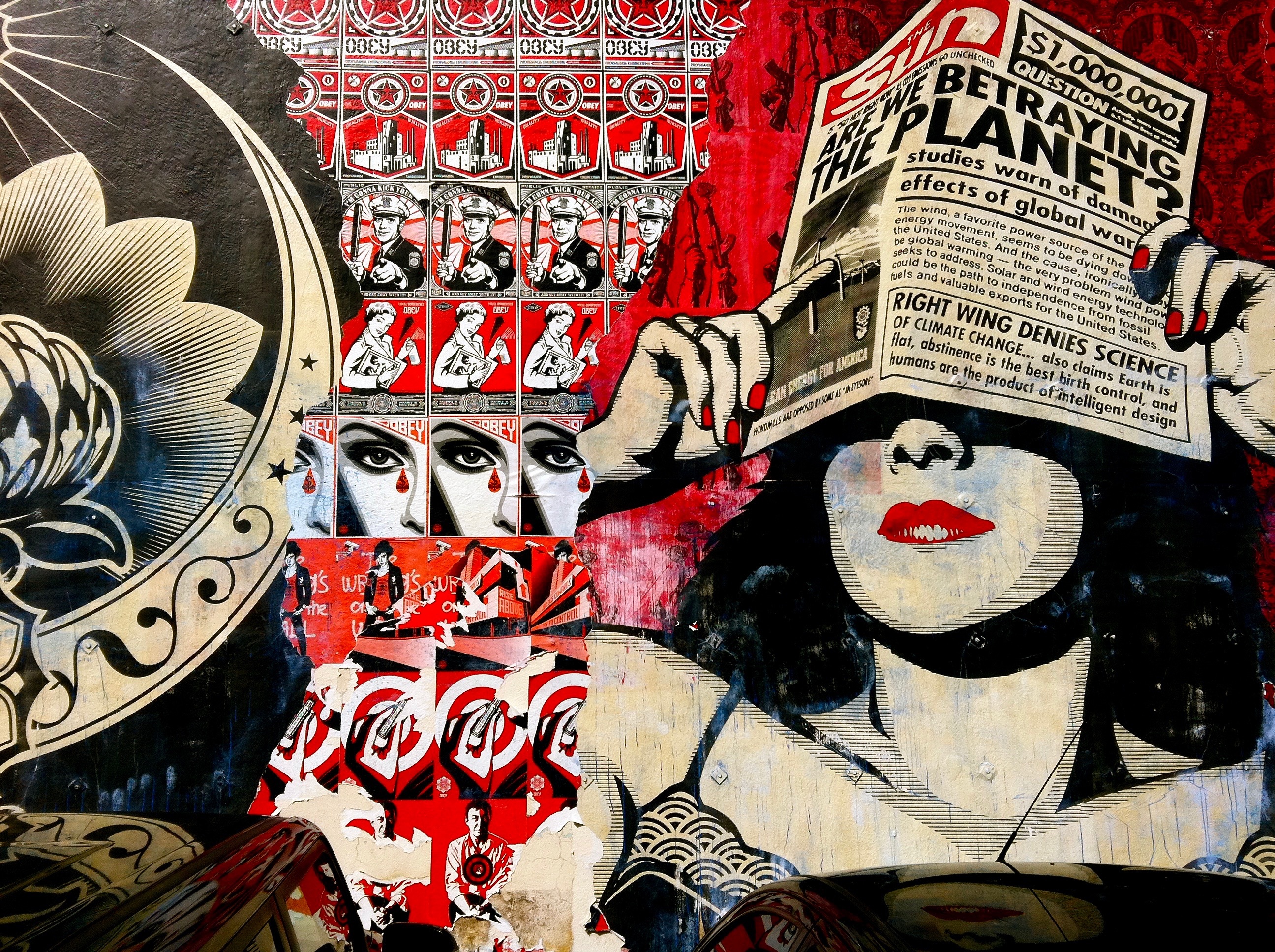
In response to my daily prompt Manufacture
#DailyPrompt, #amwriting, #postaday
On Halloween, we return to Cycles, a tale that blends dark humour with existential horror. Three motorcyclists—Gary, Tony, and Ray—discover that death is not the end. Their lives, abruptly halted, begin anew in ghostly form, forcing them to navigate a spectral cycle of existence.
The tale balances tension and absurdity expertly. The camaraderie of the three friends contrasts with the dread of their unending predicament. As they revisit old haunts and confront both the whimsical and terrifying aspects of the afterlife, readers are reminded of the permanence of consequences and the fragility of human arrogance.
Cycles serves as both a cautionary tale and a darkly comic meditation on mortality. On Halloween, it resonates deeply, reminding us that even in death, we may not escape the echoes of life. It is a fitting conclusion to a month-long journey through Thirteen Tales of Ghosts, leaving readers with chills, reflection, and a smile at the cleverness of the storytelling.

The Church revisits the terror of scepticism, meeting the supernatural. Five friends, confident in their rationality, enter a ruined church for a night of bravado and ghost stories. The tale quickly strips away their illusions, immersing the reader in escalating dread as the night progresses.
The story’s brilliance is its exploration of belief, fear, and mortality. The ruined altar, broken crucifix, and creeping mist are not mere settings—they are instruments of suspense. Each step the characters take tests their courage, forcing the reader to contemplate the fragility of life and the permanence of death.
The storytelling maintains tension through pacing and atmosphere. As the friends’ laughter fades, the supernatural becomes undeniable, leaving readers with questions about what lies beyond, and whether death itself might be a form of eternal imprisonment.

Returning to A Ghost Sighting, Thomas’s journey across centuries highlights the interplay between human emotion and spectral manifestation. Jealousy, forbidden passion, and violence converge, pulling Thomas into uncanny experiences that blur time and reality.
This layered narrative combines haunting with moral reflection. Each apparition, each transformation, challenges Thomas’s understanding of himself and the consequences of his choices. The story is not merely about fear—it explores guilt, justice, and the haunting permanence of unresolved actions.
The power of this tale lies in its layered storytelling. The spectral and the emotional intertwine, creating tension and depth. As Thomas navigates both past and present, readers are invited to consider how the echoes of human emotion might reverberate across time, leaving traces that refuse to fade.

Earl is a haunting tale of inheritance, legacy, and the enduring power of the past. A young man returns to his family estate, seeking to reclaim what is rightfully his. The mansion, decayed and shadowed, reveals secrets tied to his father’s downfall and the lingering presence of vengeful spirits.
Here, I construct a gothic atmosphere where the estate itself seems alive, a repository of grudges and memories. The confrontation with his father’s ghost challenges the protagonist’s courage, morality, and understanding of power. Through tense pacing and evocative descriptions, the story examines the human struggle to reconcile ambition with reverence for history.
What lingers most is the story’s exploration of consequences. The ghosts are more than apparitions—they are echoes of unresolved injustices. Earl’s journey through darkness and revelation reminds readers that the past never fully relinquishes its hold, and that the living must navigate a world still haunted by what came before.

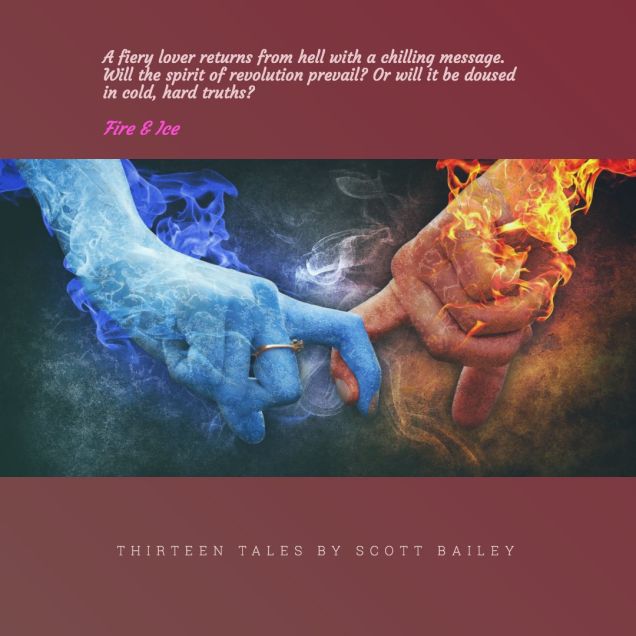
Fire and Ice is a tale where love and death intertwine under the pale moonlight. A woman stands on a remote rock outcrop, confronted by the fiery apparition of a man she once loved. The spectral figure embodies both awe and terror, his message both urgent and heartbreaking.
This tale explores the tension between defiance and survival, illustrating how human choices resonate beyond mortality. The woman’s resistance to abandoning her dangerous path adds emotional complexity, contrasting with the man’s spectral plea. Their interaction creates a haunting meditation on love, loss, and the impossibility of returning to what has passed.
The story’s strength is its vivid atmosphere. The wind’s howl, the flickering moonlight, and the man’s fiery form immerse readers in a world that is both real and otherworldly. Fire and Ice demonstrates that ghosts are not always about fear—they can carry love, warning, and sorrow, leaving readers with reflection as chilling as the supernatural itself.
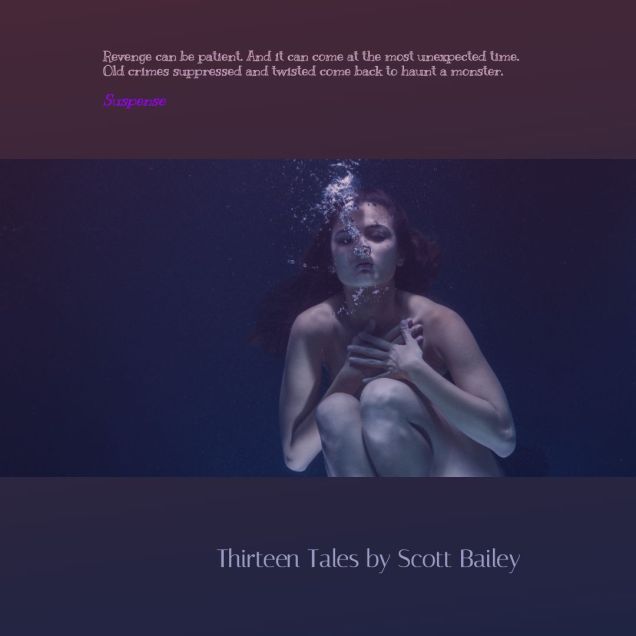
In Suspense, a precarious moment on a Swiss bridge becomes the gateway into a story of guilt, vengeance, and spectral consequence. A man finds himself dangling above a misty gorge, his fate intertwined with a pale-faced woman whose anger hints at secrets he cannot escape.
This tale blends supernatural and psychological horror seamlessly. Each revelation forces the reader to confront the weight of past choices, the lingering power of guilt, and the subtle menace of karma as a living force. The story grips from the first line and sustains tension, delivering a payoff both shocking and inevitable.
This story’s brilliance lies in its economy of setting. The bridge, the gorge, and the encroaching mist are not mere backdrop—they are instruments of suspense, shaping every action and decision. By the end, the reader is left contemplating the unseen forces that influence human lives and the ghosts we carry with us, whether corporeal or not.
The Valley is a story that thrives on ambiguity. Andrea’s solitary journey home through the quiet, rural darkness initially seems mundane, but the story carefully escalates unease. The ordinary becomes sinister: subtle noises, a childhood doll that appears to move, and the chilling appearance of a mysterious girl by an ancient monolith.
The story excels in tension and atmosphere. Andrea’s uncertainty—are these events real or imagined?—mirrors the reader’s own questions. The valley itself becomes a character, its silence and isolation amplifying dread. Yet, amidst this tension, the story includes moments of wonder, blurring the line between fear and awe.
Readers are invited to navigate both Andrea’s paranoia and the possibility of real supernatural intervention. It’s a masterclass in pacing: suspense builds steadily, drawing us into the valley’s mysteries and leaving us questioning our perceptions long after the tale concludes.

Returning to Mother, we dive once more into Connor’s tormented psyche. Unlike a typical ghost story, this tale explores the lingering power of a mother’s love—twisted, vengeful, and suffocating. Connor’s late mother continues to haunt him, or perhaps it’s his own unravelling mind that manifests her voice in biting accusations.
This tale’s prose brilliantly blurs the line between supernatural possession and psychological torment. The suffocating atmosphere of Connor’s apartment, his strained relationships, and the white-knuckled confrontation with his wife immerse the reader in a spiralling descent. The story prompts reflection: are we ever truly free of the past, or are its shadows imprinted upon our every action?
In revisiting this story, we notice subtle layers of emotional resonance. Connor is not simply haunted by a ghost; he is haunted by unresolved anger, guilt, and grief. The interplay between psychological realism and spectral horror makes Mother unforgettable, a story that stays with readers long after the final page.

 Scott Andrew Bailey - Author
